Sharpen Your Experience with a Weed Grinder That Actually Cuts
Having the right tools matters. A well-maintained cannabis grinder with sharp teeth makes a real difference in grind consistency — which directly affects how your herb burns, tastes, and hits. Whether you roll joints, pack bowls, or vape, a sharper grinder gives you more uniform, finely-broken material with less effort. This article covers what to look for in a sharp grinder, the different types available, and how to keep one running well.
What Makes a Grinder "Sharp"?
Sharpness in a grinder comes down to tooth geometry and material. Diamond-cut teeth — machined to have angled, pointed profiles — slice through bud rather than mashing it. Grinders with more teeth (40+ in a 2-inch chamber) produce a finer, more consistent result than those with fewer, blunter pegs.
- Finely machined teeth give a consistent, even grind that makes joints easier to roll and bowls easier to pack
- Vibrating herb grinders add a secondary mechanism that keeps material moving during grinding, preventing clogs and bridging
- Ergonomic knurling or grip rings on the outer body reduce hand fatigue, especially with stiffer material
- Aircraft-grade aluminum and 304 stainless steel are the standard materials for sharp, durable teeth — they hold an edge longer than zinc alloy
- Removable mesh screens (typically 80–100 micron) let kief-catching grinders fall through to a collection chamber instead of sticking to the grinding teeth
Buying Factors Worth Thinking About
See also: Grinder Materials: Aluminum vs Titanium vs Steel Guide
- Manual vs. electric: Manual grinders are portable, battery-free, and usually easier to clean. Electric and vibrating grinders handle larger batches and are easier on the hands for frequent use.
- Material: Aluminum and stainless steel resist flavor contamination and last through years of daily use. Zinc alloy is cheaper but softer — teeth dull faster. Avoid plastic for anything beyond occasional use.
- Teeth design: Diamond-cut, shark-tooth, or helical tooth profiles outperform simple peg designs. Count matters too — a 2.5-inch grinder should have at least 40 teeth total across both halves to grind evenly.
- Chamber size: 2-inch grinders are pocketable. 2.5-inch is the most common all-around size. 3-inch and above are for bulk prep or sharing sessions.
- Price: A quality 4-piece aluminum grinder runs $30–$60. Above that, you're paying for titanium coating, CNC precision, or brand. Below $15, you're usually getting zinc alloy with dull teeth.
Types of Weed Grinders
-
What is a weed grinders?
A weed grinder breaks dried cannabis flowers into smaller, uniform pieces — making them easier to roll, pack, or vape. Grinding increases surface area, which improves burn efficiency, flavor release, and overall consistency. Even a basic 2-piece grinder does this better than fingers, which press and compress trichomes rather than cutting them.
-
Metal, plastic, and wooden grinders
- Metal grinders (aluminum, stainless steel, or zinc alloy) are the default choice for durability and clean grinding. Aluminum is the most common — light, corrosion-resistant, and easy to machine to sharp tolerances. Stainless steel is heavier but virtually indestructible.
- Plastic and acrylic grinders are cheap and lightweight, but the teeth round off quickly. Fine for travel backup; not for daily use.
- Wooden grinders look great and feel tactile, but wood absorbs resin over time and the teeth tend to be simpler pegs rather than precision cuts. They need regular oiling and careful drying after cleaning.
-
Why grinding beats using your hands
- Ground material burns more evenly — no hot spots or canoeing in joints
- Finer pieces release more surface area for cannabinoids and terpenes to vaporize
- A kief-catching screen (4-piece grinders) collects potency you'd otherwise lose to sticky fingers
- Grinding takes 10 seconds; you waste nothing and handle the bud less, preserving trichomes
-
What is a vibrating weed grinder?
A vibrating grinder adds a small motor that oscillates the chamber during grinding. This keeps herb moving across the teeth instead of packing into corners, which reduces clogs and produces a more consistent grind with less manual rotation. It is especially useful for sticky, resinous strains that tend to bridge in standard grinders.
-
How to use a weed grinder
- Load it right: Break large nugs apart first and place them around the teeth, not in the center post — the center doesn't grind. Don't overfill; leave the teeth room to move.
- Grind: Rotate the lid back and forth 10–15 times. Resistance tells you if there's too much material.
- Collect: Tap the grinder on a hard surface before opening — this knocks stuck material through the screen. Open and collect from the grinding chamber.
- Store: Keep ground material in an airtight glass container. It goes stale fast when exposed to air.
-
How do I clean my grinder?
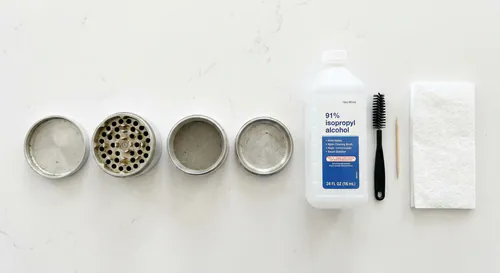
Disassemble completely. Use a stiff bristle brush (a clean toothbrush works) to clear resin from between the teeth and the screen. For a deeper clean, soak aluminum pieces in isopropyl alcohol (91%+) for 20–30 minutes, then rinse with warm water and let dry fully before reassembling. See the full grinder cleaning guide for more detail. Don't let it get to the point where the screen is clogged — that's when resin buildup starts affecting grind quality and can introduce mold.
-
Troubleshooting common grinder problems
- Clogged or stiff to turn: Resin buildup on the threading or teeth is the usual culprit. Freeze the grinder for 30 minutes first — resin contracts and breaks free more easily. Then brush out the debris and do a full isopropyl soak if needed.
- Uneven or clumpy grind: Either the teeth are worn down, the grinder is overpacked, or the material is too damp. Wet herb won't grind well in any grinder — dry it out on paper for 15 minutes first.
- Broken grinder: Check whether the manufacturer covers it under warranty before buying a replacement. As a stopgap, a cheap plastic grinder will work until you can replace it properly.
-
Does a sharper grinder improve potency?
The grinder doesn't change potency — the plant's cannabinoid content is fixed. What a finer, more consistent grind does is improve combustion efficiency, so you get more out of the same amount of material. Less unburned herb, more even vaporization, better flavor from terpene release. The kief you collect in a 4-piece grinder is genuinely more potent, since it's concentrated trichomes separated from the plant matter.
-
Electric grinders vs. manual grinders
Neither is objectively better — they solve different problems. Electric and vibrating grinders handle larger quantities faster and are easier on arthritic or fatigued hands. Manual grinders are quieter, require no power, and give you more control over grind coarseness. Most people who grind daily own one of each.
-
How do I pick the right size?
For solo sessions, a 2–2.2 inch grinder is plenty and fits in a pocket. For groups or batch-grinding, go 2.5 inch or larger. If kief collection matters to you, choose a 4-piece with a mesh screen regardless of size — the chamber depth is what accumulates it over time.
A good grinder with sharp, well-machined teeth makes every session cleaner and more consistent. Look for diamond-cut aluminum or stainless steel teeth, the right chamber size for how you actually use it, and a mesh screen if you want to collect kief. If you roll joints often, that consistency in grind size pays off every time. Browse our custom grinders if you want options built for daily use.