
RAW Papers Wholesale Pricing Guide for Dispensaries
RAW Papers Wholesale Pricing Guide: Maximizing Dispensary Margins and Inventory Strategy
RAW rolling papers dominate cannabis accessories with 40-50% market share and represent essential inventory for every dispensary - but wholesale pricing structures, bulk purchasing economics, and margin optimization strategies remain poorly understood by many retailers. Mastering RAW papers wholesale sourcing, tier pricing breakpoints, and inventory turnover optimization helps dispensaries maximize profitability from high-volume commodity products while maintaining competitive retail pricing that builds customer loyalty.
This comprehensive wholesale pricing guide examines RAW papers cost structures from single-box purchases to pallet-quantity bulk orders, analyzes margin optimization across different pack sizes and paper types, and provides inventory management strategies that balance cash flow against volume discount opportunities. Whether you're a new dispensary establishing initial paper inventory or an established multi-location operator optimizing wholesale purchasing, this guide delivers actionable intelligence for improving paper category profitability.
RAW Papers Product Line Overview: Understanding SKU Complexity
RAW offers extensive product variations across paper sizes, materials, and packaging configurations. Understanding this complexity helps dispensaries select optimal SKU mixes balancing comprehensive selection against inventory efficiency.
Size Variations and Sales Velocity: RAW produces papers from King Size Slim (most popular at 60-70% of sales) to 1¼ size, King Size, Emperador, and specialty sizes like Organic Hemp and Classic. Stock depth should reflect sales velocity - maintain 90-120 days inventory on King Size Slim variants while carrying 30-45 days on slower-moving specialty sizes. New dispensaries should start with 3-4 core SKUs (King Size Slim, King Size, 1¼, and one specialty option) before expanding to comprehensive selections.
Material Types: Classic, Organic, Black, and Specialty: RAW Classic natural unbleached papers represent baseline products with highest turnover. Organic Hemp commands 15-25% premium pricing with slower velocity. RAW Black (chlorine-free thin papers) and specialty variants like Garden Sage serve niche markets with premium margins but limited volume. Allocate 70-75% of paper inventory investment to Classic line, 15-20% to Organic, and 10% to specialty variants for balanced mix serving diverse preferences without excessive slow-moving inventory.
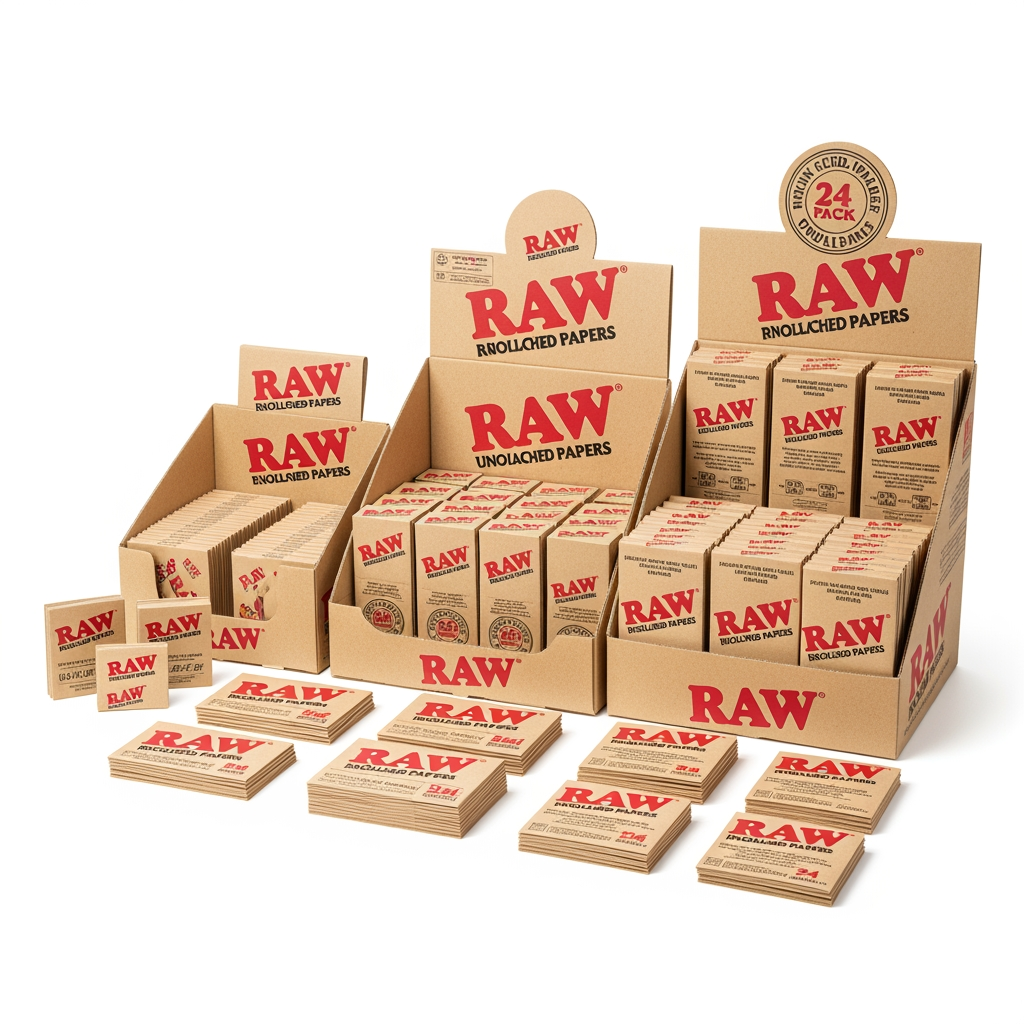
Pack Configurations: Single, 6-Pack, 24-Pack, and Bulk: RAW papers wholesale in various pack configurations affecting per-unit costs and inventory efficiency. Single booklets wholesale at highest per-unit cost but turn over fastest. Six-packs offer moderate pricing with good consumer value. Twenty-four packs deliver best wholesale pricing but require customers buying significant quantities. Stock all three configurations allowing customer choice while using 24-packs to capture volume-buyer margins.
Accessories and Complementary Products: RAW produces extensive accessory lines including tips, rolling trays, cones, and storage. While this guide focuses on papers, comprehensive RAW programs should include key accessories. Many dispensaries achieve 40-50% of rolling paper category profit from complementary accessories despite papers representing 70-80% of units sold. Consider custom rolling papers as premium alternatives to standard RAW for customers seeking personalized options.
RAW Papers Wholesale Pricing Structure: Breaking Down Cost Tiers
Understanding exact wholesale pricing helps dispensaries evaluate supplier competitiveness and calculate margin scenarios for retail pricing decisions. Note that pricing fluctuates based on supplier, location, and order volume - these figures represent general market rates for planning purposes.
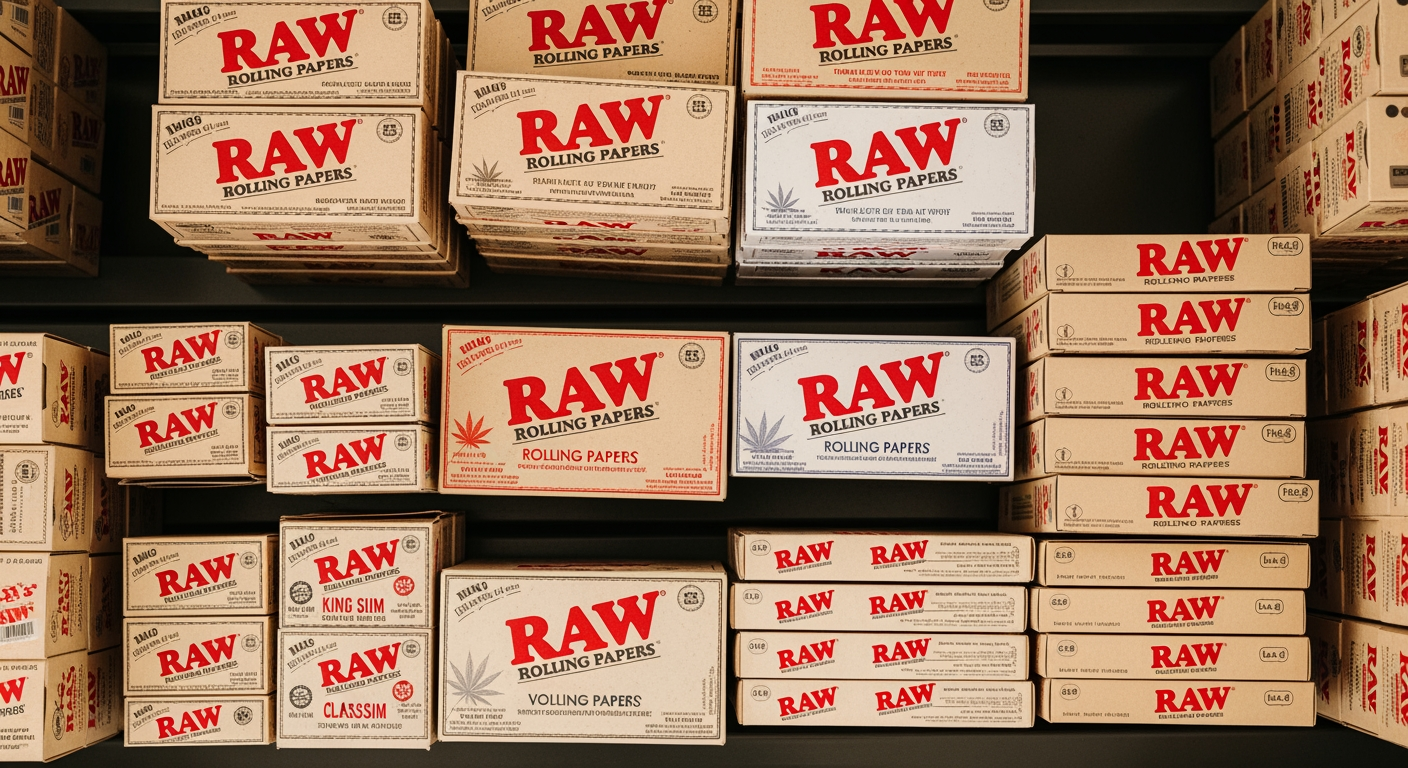
Small Quantity Wholesale (1-10 boxes): Purchasing small quantities from distributors typically costs $1.10-$1.35 per booklet for King Size Slim Classic depending on source. At these costs, standard $2.99-$3.49 retail pricing yields 55-68% gross margins - acceptable but leaving optimization opportunities on table. Small quantity purchasing suits only very low-volume locations or emergency inventory replenishment between larger orders.
Medium Quantity Discounts (10-50 boxes): Ordering 10-50 boxes drops per-booklet costs to $0.90-$1.15 depending on negotiation and supplier. This pricing tier delivers 62-72% gross margins at $2.99 retail or allows competitive $2.49-$2.79 pricing while maintaining 55-65% margins. Most single-location dispensaries operate optimally in this purchase volume range balancing costs against inventory carrying requirements.
Bulk Volume Pricing (50-100+ boxes): Committed bulk orders of 50-100+ boxes achieve $0.75-$0.95 per booklet wholesale costs representing 25-35% savings versus small quantity pricing. These economics allow $2.49 retail pricing with 62-68% margins or premium $2.99 pricing with 70-75% margins. Multi-location operators and high-volume dispensaries should target this tier through quarterly or semi-annual bulk ordering programs.
Pallet and Container Pricing (500+ boxes): Direct relationships with RAW distributors or importers for pallet quantities drive costs to $0.65-$0.85 per booklet. This pricing enables aggressive $1.99-$2.49 retail positioning while maintaining 58-70% margins, or premium $2.99 pricing with exceptional 72-78% margins. However, pallet purchases require significant capital investment ($8,000-$15,000+) and storage capacity making them practical only for large multi-location operators or purchasing cooperatives.
Organic and Premium Variant Pricing: RAW Organic and specialty papers wholesale at 20-35% premiums over Classic equivalents. Organic King Size Slim typically costs $1.20-$1.50 at medium volumes versus $0.90-$1.15 for Classic. Retail pricing should maintain proportional premiums - if Classic retails at $2.99, price Organic at $3.99-$4.49 preserving margin percentages across product line while justifying premium through material differentiation.
Retail Pricing Strategy: Competitive Positioning vs Margin Optimization
Effective retail pricing balances margin goals against competitive dynamics and customer price sensitivity. RAW papers' commodity nature and widespread availability create pricing pressures requiring strategic approaches.
Market Rate Competitive Pricing: Most markets see RAW King Size Slim Classic retailing at $2.49-$3.49 depending on location and competition. Pricing above $3.49 typically reduces velocity unless location convenience strongly favors your dispensary. Research local competitors (dispensaries, smoke shops, convenience stores) to understand baseline pricing, then position slightly below leaders if volume is priority or match pricing if emphasizing quality and service over lowest price.
Psychology of $2.99 Price Point: Testing shows $2.99 pricing significantly outperforms $3.00+ for commodity products like papers despite minimal actual savings. The psychological sub-$3 threshold creates "value" perception increasing purchase likelihood. If premium positioning allows $3+ pricing, consider whether incremental margin justifies reduced velocity - often $2.99 pricing generates more total profit through increased volume despite lower per-unit margins.
Multi-Pack Discount Structures: Encourage larger purchases through progressive discounts: single booklets at $2.99, 3-packs at $7.99 (11% discount), 6-packs at $14.99 (16% discount). These tiered discounts increase average transaction values and improve inventory turnover while maintaining acceptable blended margins. Customers purchasing multi-packs feel they're receiving value while your margin percentages remain strong due to improved wholesale costs on larger pack configurations.
Bundle Pricing with Accessories: Create "Rolling Kit" bundles pairing RAW papers with tips, grinders, and rolling trays at slight discounts versus individual pricing. Bundles increase average transaction values, introduce customers to complementary products, and create perceived value justifying overall pricing. Position bundles at checkout or through signage near paper displays to convert single-item purchases into multi-product sales.
Supplier Evaluation: Wholesale Source Quality Beyond Just Pricing
Lowest wholesale pricing doesn't always deliver best total value when considering product authenticity, reliability, shipping costs, and payment terms. Sophisticated dispensaries evaluate total cost of goods sold including these factors.
Authenticity and Counterfeit Risk: RAW papers' popularity creates counterfeiting problems with fake products entering distribution channels through questionable wholesalers. Counterfeit papers damage customer satisfaction and brand reputation when quality disappoints. Verify supplier authenticity through RAW's authorized distributor lists, examine packaging quality closely (counterfeits often show poor printing and materials), and avoid suppliers offering prices significantly below market rates without clear volume justification.
Shipping Costs and Minimum Orders: Advertised wholesale pricing often excludes shipping which can add 8-15% to effective costs for small orders. Calculate delivered cost including shipping when comparing suppliers. Many distributors offer free shipping at minimum order thresholds ($500-$1,000 typical) - structure orders to exceed these minimums maximizing value. Local suppliers with higher per-unit costs but lower/no shipping expenses may deliver better total economics than distant bulk sources.
Payment Terms and Cash Flow Impact: Suppliers requiring prepayment or payment on delivery tie up capital immediately, while net-30 or net-60 terms allow selling inventory before payment is due. This 30-60 day cash flow advantage effectively reduces your cost of capital and should factor into supplier selection. Newer dispensaries may lack credit relationships for extended terms initially but should negotiate for them after establishing purchase history - improved terms are worth 5-10% in effective value through cash flow benefits.
Stock Reliability and Fulfillment Consistency: Suppliers frequently out of stock on core SKUs create operational headaches requiring emergency reorders from expensive backup sources. Evaluate potential suppliers' stock consistency through test orders before committing to exclusive relationships. Reliable suppliers maintaining deep inventory command slight pricing premiums but prevent stockout situations that lose sales and frustrate customers. This reliability value often justifies 5-8% higher costs versus unreliable discount suppliers.
Inventory Management: Balancing Volume Discounts Against Carrying Costs
Bulk purchasing delivers better per-unit costs but ties up capital in inventory and creates storage requirements. Optimal strategies balance these competing priorities based on dispensary size, cash position, and sales velocity.
Calculating Optimal Order Quantities: Economic order quantity (EOQ) formulas help determine ideal purchase volumes balancing ordering costs, carrying costs, and volume discounts. For most single-location dispensaries, quarterly orders of 15-30 boxes across SKUs optimize this balance. High-volume locations may justify monthly orders of 30-50 boxes capturing volume discounts without excessive inventory. Calculate your specific EOQ based on monthly sales velocity, storage capacity, and cost of capital.
Safety Stock for High-Velocity SKUs: RAW King Size Slim Classic turns over so rapidly in most dispensaries that stockouts create immediate sales loss. Maintain 30-45 days safety stock beyond calculated order quantities specifically for this SKU protecting against demand spikes or supply delays. Slower-moving specialty variants don't justify safety stock - reorder at normal intervals accepting potential temporary stockouts on low-volume items.
Seasonal Demand Patterns: Rolling paper sales typically increase 15-25% during holidays, festivals, and summer months when consumption occasions increase. Plan inventory builds 4-6 weeks before these periods ensuring adequate stock during high-demand windows. Post-holiday periods often see 10-15% velocity decreases - adjust orders downward preventing excess inventory accumulation during slower periods.
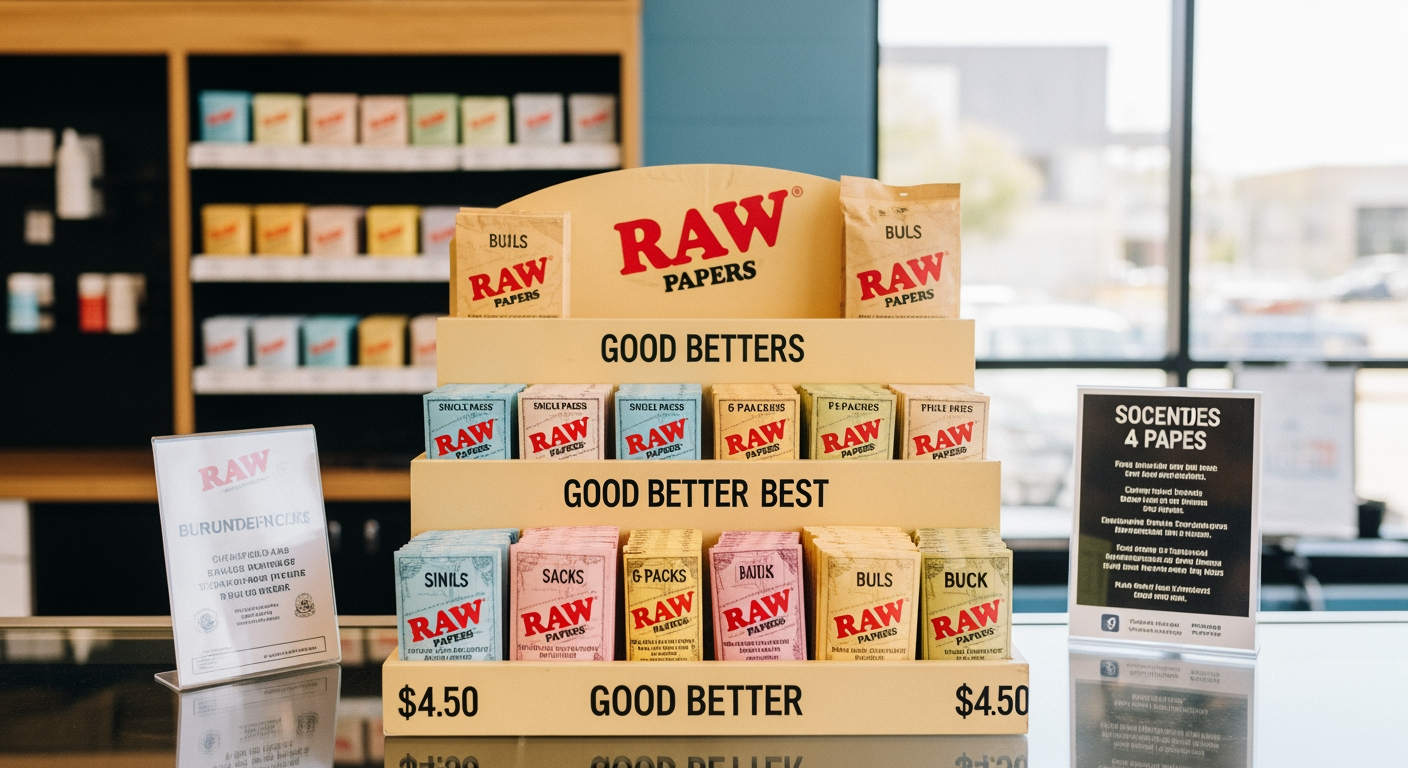
Storage and Inventory Organization: Papers require minimal storage space but benefit from organized systems preventing stock loss and enabling easy rotation. Store boxes in cool, dry locations away from direct sunlight which can degrade paper quality over time. Implement first-in-first-out (FIFO) rotation ensuring older inventory sells before newer stock - while papers have long shelf life, fresh inventory maintains optimal quality. Consider this when evaluating storage capacity for bulk orders.
Margin Analysis: Profit Optimization Across Pack Sizes
Different pack configurations yield varying profit margins requiring strategic mix optimization. Understanding these economics helps maximize category profitability beyond just stocking what customers request.
Single Booklet Economics: Individual booklets wholesale at highest per-unit costs ($1.10-$1.35 at medium volumes) but retail at premium pricing ($2.99-$3.49) yielding acceptable 55-68% margins. However, single booklets require most frequent restocking and generate lowest absolute profit per transaction. Stock adequate singles for customer convenience but actively promote multi-packs for improved economics.
Multi-Pack Value and Margins: Six-packs wholesale at $5.50-$7.50 (effective $0.92-$1.25 per booklet) and retail at $14.99-$16.99 generating 55-65% margins while delivering $7.50-$9.50 gross profit per sale versus $1.65-$2.15 on single booklets. The 3-4X higher absolute profit per transaction makes multi-pack conversion extremely valuable. Train staff to suggest multi-packs during checkout: "Want to grab a 6-pack and save? Works out to $2.50 per pack versus $2.99 buying singles."
Bulk Pack B2B Opportunities: Twenty-four packs wholesale at $18-$24 ($0.75-$1.00 per booklet) and retail at $49.99-$59.99 creating 52-70% margins with $26-$36 gross profit per sale. These primarily serve small smoke shops, consumption lounges, or heavy individual users. Don't expect high velocity but maintain stock for B2B customers and serious enthusiasts. The exceptional absolute profit per sale justifies inventory investment despite slower turnover.
Blended Category Margins: Track overall paper category margins rather than individual SKU margins to understand true profitability. Typical well-managed dispensary paper programs achieve 60-68% blended gross margins across all pack sizes. If your blended margin falls below 60%, examine purchasing costs and retail pricing. Above 70% may indicate pricing above market creating velocity limitations. Optimize blended margins through promoting higher-absolute-profit multi-packs while maintaining competitive single-booklet pricing for market perception.
Competition Analysis: Positioning Against Smoke Shops and Convenience Stores
Dispensaries face rolling paper competition from smoke shops, convenience stores, and online retailers creating pricing pressure. Understanding competitive dynamics helps develop differentiated positioning beyond just price matching.
Smoke Shop Competitive Landscape: Dedicated smoke shops typically price RAW papers at $2.49-$3.99 depending on location and positioning. They often carry more extensive RAW accessories and specialty sizes than dispensaries. Rather than competing on breadth, dispensaries should emphasize convenience (customers already shopping for cannabis can get papers simultaneously), product knowledge, and integration with cannabis purchasing. Bundle papers with flower purchases or offer papers as add-ons during checkout to capture sales before customers consider shopping elsewhere.
Convenience Store Pricing Dynamics: Gas stations and convenience stores increasingly carry basic RAW papers (typically just King Size Slim Classic) at $3.49-$4.99 capitalizing on impulse purchases and location convenience. These high prices create opportunity for dispensaries to undercut significantly while maintaining strong margins. Advertise $2.99 or lower pricing for RAW papers attracting price-conscious customers who may not have considered your dispensary for accessory purchases.
Online Retail Challenges: Amazon and specialty online retailers sell RAW papers at $1.99-$2.49 creating price pressure but requiring wait time and shipping costs. Dispensaries can't match absolute lowest online pricing profitably but can emphasize immediate availability and no shipping costs. Position in-store pricing at $2.99 as competitive with online after customers factor in shipping and wait time. Customers paying $5-$8 shipping on $2.29 Amazon papers pay more total than $2.99 immediate purchase at your location.
Brand Loyalty and Quality Positioning: Some dispensaries position RAW papers as premium accessories worthy of slightly higher pricing through emphasis on quality, authenticity guarantees, and knowledgeable staff. This works in markets with affluent customers valuing expertise over absolute lowest prices. If pursuing premium positioning, ensure staff can discuss RAW's sustainability story, manufacturing process, and product differentiation justifying the premium. Otherwise, competitive pricing makes more sense for volume-focused strategies.
Promotional Strategies: Driving Papers Revenue Through Marketing
Strategic promotions increase papers category revenue, introduce customers to premium variants, and strengthen overall dispensary sales. Effective programs generate incremental profit beyond regular sales velocity.
"Buy 2 Get 1 Free" Multi-Pack Promotions: Periodically offer buy-2-get-1-free on 6-packs creating strong perceived value while maintaining acceptable margins. Customers purchasing 3 six-packs (18 booklets total) at $29.98 versus regular $44.97 feel they're receiving exceptional value, while your blended margin remains 50-55% if wholesale costs are favorable. These promotions drive significant volume spikes building category revenue and customer goodwill.
Bundle Papers with Flower Purchases: Offer RAW papers at discounted rates ($1.99-$2.49) when purchasing flower creating add-on sales with minimal margin impact. Customers buying eighth or more qualify for promotional papers pricing encouraging incremental accessory purchases. This strategy increases average transaction values while moving paper inventory - even at reduced margins, the incremental profit adds up across hundreds of transactions monthly.
Loyalty Program Integration: Award points or rewards for papers purchases encouraging repeat buying from your dispensary versus competitors. Double points on RAW papers certain days creates traffic and builds category loyalty. Customers accumulating points toward rewards choose your dispensary for papers even when convenient alternatives exist nearby. This loyalty has long-term value exceeding individual transaction margins.
New Product Launches and Sampling: When RAW releases new sizes or variants, create sampling opportunities where customers purchasing papers receive small pack of new products for trial. This builds awareness of expanded selection while creating positive association with your dispensary as source for latest RAW products. Early adoption of new RAW variants sometimes allows premium pricing before market competition establishes, capturing above-average margins on innovation.
Private Label and Alternative Brands: Diversifying Beyond RAW
While RAW dominates, strategic inclusion of alternative brands and private label options can improve margins and serve price-sensitive segments. Understanding when and how to diversify optimizes overall category profitability.
Budget Brand Positioning: Stock one budget rolling paper brand (TOP, ZigZag, etc.) at $1.99-$2.49 retail serving extremely price-sensitive customers while protecting RAW from price pressure. These value alternatives typically wholesale at $0.50-$0.75 allowing acceptable margins at lower retail prices. Position budget brands as basic functional options while emphasizing RAW's quality and experience advantages justifying premium. This tiered approach captures both value and quality segments maximizing total category revenue.
Premium Alternatives to RAW: Consider ultra-premium brands (OCB, Smoking, Vibes) at $3.99-$5.99 retail creating quality tier above RAW. These specialty papers wholesale at $1.50-$2.50 but command significant retail premiums from customers seeking premium experiences. Stock limited quantities testing market receptiveness - even modest sales at 60-70% margins contribute meaningfully to category profit. Some markets with affluent customers readily adopt premium alternatives while price-sensitive markets show minimal interest.
Private Label Opportunities: Custom branded rolling papers create unique product offerings with superior margins (typically 65-75%) while building dispensary brand identity. Customers appreciate exclusive products unavailable elsewhere and branded papers generate ongoing visibility when used. Minimum order quantities (usually 10,000-25,000 booklets) and setup costs require careful analysis but potential margin improvements and branding value justify investigation for established dispensaries with strong customer bases.
Cone and Pre-Rolled Alternative Formats: RAW cones represent growing segment as convenience-focused customers shift from traditional rolling. Stock RAW cone selections alongside papers serving customers preferring prepared solutions. Cones typically wholesale at higher per-unit costs but command premium retail pricing with comparable margins. Offering both papers and cones creates comprehensive rolling solutions preventing customers shopping elsewhere for format preferences.
Purchasing Cooperatives: Collective Buying Power for Small Dispensaries
Individual small dispensaries often lack volume for optimal wholesale pricing. Cooperative purchasing arrangements help smaller operators access bulk pricing through collective orders.
Informal Buying Groups: Network with other local dispensaries to coordinate bulk orders splitting volume discounts. Five dispensaries each ordering 20 boxes individually pays more than collective 100-box order split between locations. This requires trust and coordination but can save 15-25% on wholesale costs. Establish clear agreements about payment timing, delivery splitting, and order minimums preventing conflicts. Even competitors sometimes cooperate on commodity product purchasing where collective benefits outweigh competitive concerns.
Formal Purchasing Cooperatives: Some markets have established dispensary cooperatives managing collective purchasing across multiple categories. These formal organizations negotiate volume pricing, coordinate deliveries, and handle payment consolidation simplifying participation for members. Typical co-op fees of 2-5% are easily offset by 15-30% wholesale cost savings on bulk purchasing. Research whether dispensary cooperatives exist in your market - if not, consider organizing one if sufficient peer relationships exist.
Multi-Location Operator Advantages: Dispensaries with multiple locations should consolidate all papers purchasing into single orders allocating inventory across locations. This centralized purchasing captures maximum volume discounts while maintaining flexibility through cross-location inventory transfers addressing varying velocities. The complexity requires robust inventory management systems but margin improvements justify the operational overhead for 3+ location operators.
Distributor Direct Relationships: Once reaching consistent 50-100+ box quarterly volumes, approach RAW distributors directly rather than purchasing through intermediary wholesalers. Direct relationships often unlock additional 5-15% discounts, priority allocation during shortages, and access to new products before general availability. These benefits require commitment to volume minimums and direct payment relationships but deliver significant value for established operators.
Conclusion: Strategic Wholesale Management for Papers Category Excellence
RAW rolling papers wholesale management represents critical dispensary competency - high sales velocity and commodity pricing create both significant revenue opportunity and margin pressure requiring strategic approaches. Success demands understanding detailed pricing tiers, negotiating effectively with suppliers, optimizing inventory levels balancing costs against discounts, and implementing retail strategies that maintain competitive positioning while preserving profitability.
Dispensaries treating papers as afterthought commodity items leave substantial profit unrealized through suboptimal purchasing, excessive inventory carrying costs, and missed opportunities for multi-pack conversion and complementary product bundling. Those implementing systematic wholesale management - tracking supplier performance, analyzing margin economics across pack sizes, and actively promoting higher-profit configurations - achieve 15-25% better category profitability while often growing absolute revenue through improved availability and competitive pricing.
The rolling papers category may seem simple but rewards sophisticated management with reliable profit contribution and customer satisfaction. Mastering wholesale economics creates competitive advantage extending beyond papers to overall accessory merchandising excellence.
Ready to optimize your dispensary's rolling papers program with quality wholesale sourcing and comprehensive selection? Explore MunchMakers' rolling paper solutions including custom branded options, bulk purchasing programs, and complete accessory collections designed for dispensaries maximizing both margins and customer satisfaction in papers categories.