
Custom vs Generic Cannabis Accessories: ROI Analysis
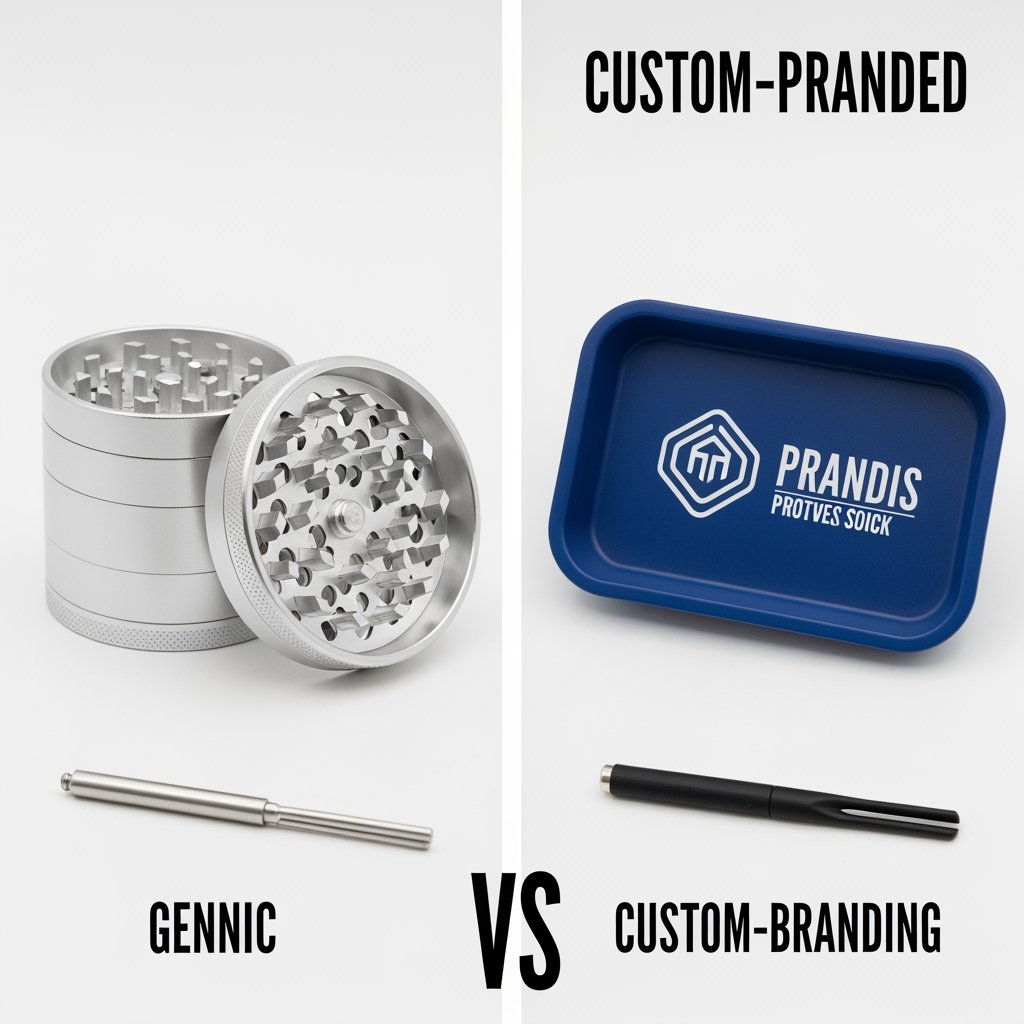
Custom vs Generic Cannabis Accessories: Complete ROI Business Case Analysis
Custom-branded accessories command 30-60% price premiums over generic equivalents while creating ongoing brand visibility and customer loyalty impossible to achieve through commodity products - yet many dispensaries hesitate investing in custom programs questioning whether margin improvements and branding benefits justify higher minimum order quantities and upfront costs. Understanding custom accessory economics, calculating total ROI including marketing value and customer lifetime impact, and developing data-driven business cases helps dispensaries make informed decisions about custom programs separating genuine opportunities from expensive mistakes.
This comprehensive ROI analysis examines financial performance comparing custom versus generic accessories across grinders, rolling papers, storage, and trays while quantifying branding value, customer loyalty impacts, and competitive differentiation benefits extending beyond simple margin calculations. Whether considering initial custom program launch or evaluating expansion of existing branded merchandise, this guide provides frameworks for rigorous financial analysis supporting strategic accessory procurement decisions.
Direct Margin Comparison: Custom vs Generic Economics
Understanding baseline margin differences between custom and generic accessories establishes financial foundation for ROI analysis before considering intangible branding benefits.
Generic Accessory Baseline Margins: Commodity accessories typically wholesale at established market rates creating competitive margin constraints. Generic aluminum grinders wholesale at $6-$12 and retail at $19.99-$34.99 yielding 55-65% gross margins. Generic rolling papers wholesale at $0.90-$1.15 per pack retailing at $2.49-$2.99 for 60-65% margins. Generic rolling trays wholesale at $4-$8 retailing at $14.99-$24.99 for 60-68% margins. These baseline margins represent market standards - attempting significantly higher retail pricing on generic products creates customer resistance and lost sales to competitors matching market rates.
Custom Accessory Premium Pricing: Branded accessories command 30-60% retail premiums through perceived exclusivity and brand value. Custom-branded grinders wholesale at $8-$16 (33-55% premium over generic) but retail at $29.99-$49.99 (50-70% premium) yielding 70-75% gross margins. Custom rolling papers wholesale at $1.20-$1.60 per pack (33-50% premium) retailing at $3.99-$4.99 (60-80% premium) for 68-75% margins. Custom trays wholesale at $6-$12 (50-67% premium) retailing at $24.99-$39.99 (67-100% premium) for 70-78% margins. The margin percentage improvements combined with higher absolute pricing create 2-3X gross profit per unit versus generic equivalents.
Volume Requirements and Breakeven Analysis: Custom accessories require minimum orders (typically 100-500 units depending on product and supplier) creating upfront inventory investment. Calculate breakeven comparing incremental profit per custom unit versus generic alternatives. Example: If custom grinders generate $22 gross profit versus $13 on generic equivalents ($9 incremental profit per custom sale), a 200-unit custom order requires selling 134 custom units to match generic profitability (200 units × $16 custom wholesale = $3,200 investment; $3,200 ÷ $9 incremental profit = 356; 200 base units + 134 incremental = 334 total to breakeven; breakeven occurs at 67% sellthrough). Understanding breakeven thresholds helps assess custom program risk and viability.
Setup Costs and Per-Unit Economics: Custom programs incur setup fees ($50-$200 typical) for artwork preparation, screen creation, or engraving programming. Amortize setup costs across expected order quantities calculating true per-unit costs. A $150 setup fee on 250-unit order adds $0.60 per unit; on 100-unit order adds $1.50 per unit. Higher minimum quantities reduce per-unit setup costs improving overall economics. Include setup costs in initial order ROI calculations but remember subsequent reorders avoid setup fees dramatically improving economics on repeat purchases.
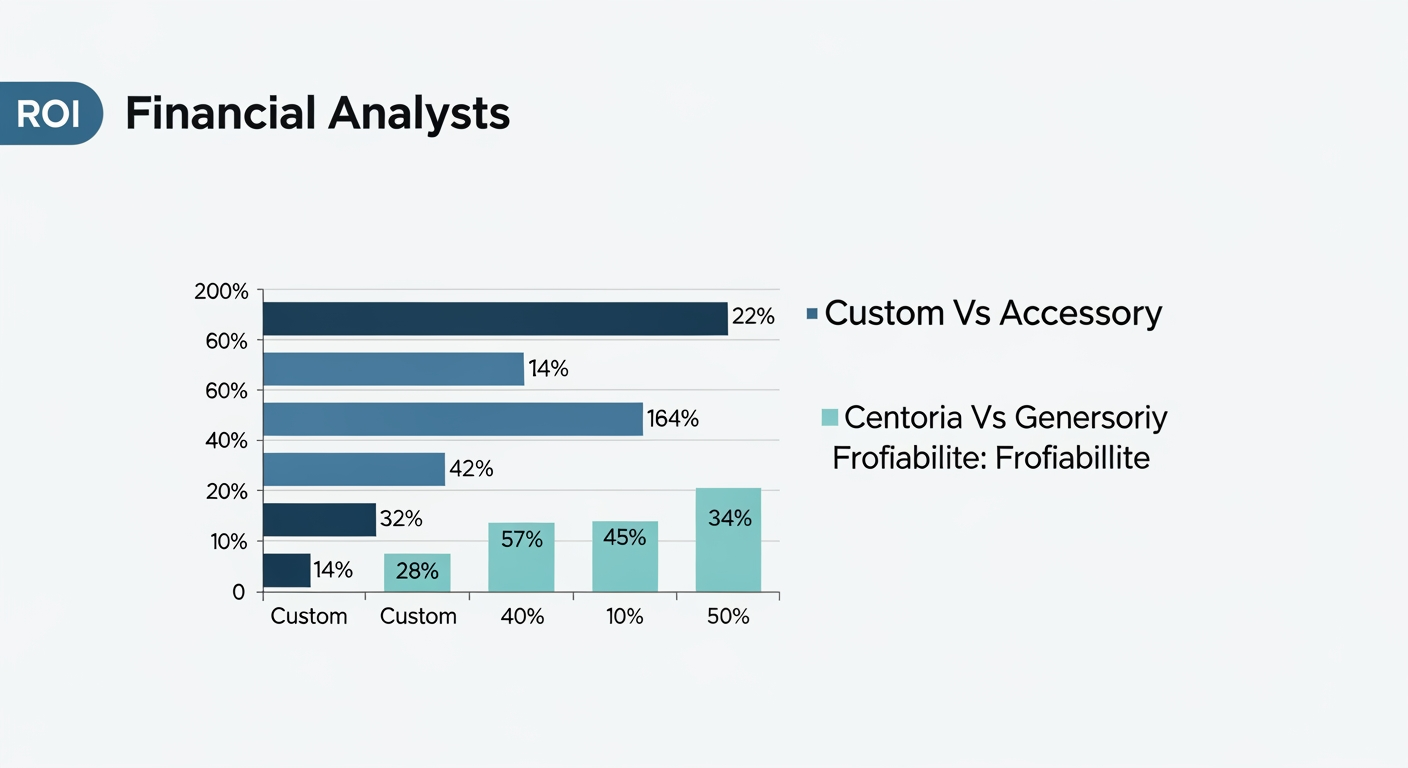
Customer Lifetime Value Impact: Branded Merchandise as Loyalty Driver
Custom accessories create ongoing brand exposure and emotional connections increasing customer lifetime value through improved retention and purchase frequency - benefits extending beyond single transaction margins.
Brand Exposure and Top-of-Mind Awareness: Customers using branded grinders, trays, and accessories encounter dispensary brand daily or weekly during cannabis consumption creating hundreds of brand impressions annually. This repeated exposure maintains top-of-mind awareness when purchase occasions arise. Compare against traditional advertising costs - if 1,000 customers each using branded grinder daily generates 365,000 annual brand impressions, equivalent Facebook advertising might cost $2,000-$5,000 achieving similar impression volumes. The branded merchandise investment delivers ongoing impressions without recurring advertising costs while providing functional value customers appreciate versus interruptive advertising they ignore.
Customer Retention and Loyalty Measurement: Track retention rates comparing customers who purchased branded merchandise versus those buying only flower/products. Some dispensaries report 15-25% higher 12-month retention among branded accessory buyers - these customers develop identity connections with dispensary brands versus purely transactional relationships with commodity retailers. If average customer lifetime value runs $1,200 over 18 months, improving retention 20% creates $240 incremental lifetime value. Capturing just 10% of this value ($24) through branded merchandise justifies significant custom accessory investments when considering 100+ customers purchasing branded products.
Social Proof and Word-of-Mouth Marketing: Customers using branded accessories in social consumption settings create organic marketing exposure to friends and social circles. Each branded grinder or tray potentially exposes 5-20 additional consumers to dispensary brand during group sessions creating awareness and trial motivation. This social proof carries more credibility than paid advertising - recommendations from trusted friends using dispensary-branded products influence purchase decisions more effectively than marketing messages. Quantifying social impact remains difficult but dispensaries with strong branded merchandise programs consistently report higher new customer acquisition from word-of-mouth referrals.
Premium Positioning and Price Anchoring: Offering custom branded accessories signals quality focus and brand investment creating premium positioning halo effects across entire product assortment. Customers associate brands investing in quality branded merchandise with overall quality commitment making them more willing to accept premium pricing on flower and products. This positioning value particularly benefits dispensaries in competitive markets where differentiation beyond commodity pricing creates strategic advantages. The custom accessories investment creates perception of premium brand versus budget commodity competitor even when flower pricing remains similar.
Competitive Differentiation and Market Positioning
Branded accessory programs create defensible competitive advantages impossible to replicate through generic product offerings - strategic value extending beyond financial returns.
Exclusive Product Differentiation: Generic accessories available everywhere create zero differentiation - customers purchase wherever convenient at lowest price. Custom branded products exist exclusively at your dispensary creating unique offerings competitors cannot match. This exclusivity eliminates direct price comparison and reduces customer willingness to shop competitors for identical products. The differentiation particularly valuable in markets with high dispensary density where most shops offer indistinguishable commodity products. Exclusive branded merchandise gives customers specific reasons choosing your dispensary over interchangeable alternatives.
Brand Identity and Customer Connection: Strong branded merchandise creates emotional connections and identity associations transcending transactional relationships. Customers who self-identify with dispensary brands through merchandise ownership develop loyalty resisting competitive offers and price promotions from competitors. This identity connection particularly resonates with younger consumers viewing cannabis consumption as lifestyle expression where branded accessories signal community belonging and value alignment. Cultivation of brand community through merchandise creates customer lifetime value impossible to achieve through pure transaction efficiency.
Premium Tier Accessibility: Custom branded accessories allow dispensaries creating premium product tiers without manufacturing cannabis products themselves - regulatory barriers making vertical integration impractical for most retailers. Branded custom rolling trays and quality accessories establish premium brand positioning demonstrating quality commitment while remaining accessible to regulatory requirements and capital constraints preventing product manufacturing. This premium tier positioning creates perceptions extending to flower and product selections even when sourced from same suppliers as competitors.
Market Entry Barriers: Established branded merchandise programs create soft barriers to new competitor entry by claiming mindshare and building brand equity difficult for startups to replicate quickly. New dispensaries opening must invest significantly in branding and merchandise to compete with established programs creating meaningful time and capital barriers. While not insurmountable, these barriers slow competitive threats and protect market share in ways generic product offerings cannot achieve.
Category-Specific ROI: Product-by-Product Analysis
Different accessory categories deliver varying ROI profiles requiring category-specific evaluation rather than uniform assumptions across products.
Custom Grinder ROI Profile: Grinders represent highest absolute profit potential and strongest branding value through frequent use and social visibility. Custom grinder programs typically achieve 18-24 month payback periods including all setup costs and minimum order investments when accounting for improved margins, customer retention, and reduced marketing costs. The combination of premium pricing sustainability (customers readily accept $10-$15 premiums for quality branded grinders), frequent use creating ongoing impressions, and excellent absolute profit per sale ($20-$30 typical) makes grinders optimal category for initial custom programs. Stock 2-3 custom grinder SKUs across price points serving different customer segments without excessive inventory complexity.
Custom Rolling Paper Economics: Papers create recurring revenue and frequent brand exposure but require much larger minimum orders (typically 10,000-25,000 booklets) creating significant upfront investment. The recurring nature creates excellent long-term economics - customers purchasing branded papers weekly or monthly drive ongoing revenue and impressions. However, initial minimum orders of $12,000-$40,000 make papers appropriate for established dispensaries with strong cash positions rather than startups or undercapitalized operations. Calculate ROI over 12-18 months accounting for recurring purchases rather than single transaction analysis - papers' value compounds through repeat buying impossible with durable goods like grinders.
Custom Rolling Tray Analysis: Trays offer good margins and branding value with moderate minimum orders (100-250 units typical) creating accessible entry point for custom programs. The large surface area provides excellent branding visibility while premium materials (wood, bamboo) justify price premiums customers accept readily. Tray programs typically achieve 12-18 month payback including setup costs through combination of improved margins and moderate velocity. Position custom trays as premium display pieces encouraging countertop or coffee table placement creating ongoing brand visibility to customers and guests. Consider trays as second custom category after grinders once initial program demonstrates success.
Custom Storage Container Considerations: Branded stash jars and storage create functional branding opportunities though customers may prefer decorative third-party branded containers (artist collaborations, lifestyle brands) over dispensary branding for home display. Storage ROI typically lags grinders and trays due to lower emotional attachment to dispensary branding versus functionality or aesthetics. Consider storage as complementary custom category after establishing grinder and tray programs rather than initial focus. Some dispensaries successfully bundle branded storage with flower purchases creating gift-with-purchase programs driving volume without relying on voluntary storage container sales.
Minimum Order Quantity Management and Inventory Risk
Custom programs require larger minimum orders than generic purchasing creating inventory risk requiring strategic management and realistic demand planning.
Realistic Velocity Forecasting: Many dispensaries overestimate custom accessory velocity leading to years-long inventory turnover creating cash flow problems and opportunity costs. Conservative forecasting prevents overcommitment - assume custom products sell at 60-75% of generic equivalent velocity initially due to premium pricing limiting customer base. If selling 40 generic grinders monthly, forecast 25-30 custom grinders monthly for initial program sizing. This conservative approach prevents multi-year inventory sits and allows testing market acceptance before committing to larger quantities. Underpromising and reordering shows better economics than optimistic forecasts creating dead inventory.
Multi-Location Volume Consolidation: Multi-location operators should consolidate custom accessory orders across locations reducing per-location minimums and improving setup cost amortization. Five locations each needing 60 custom grinders creates 300-unit order accessing better per-unit pricing and spreading setup costs across larger base. Centralized purchasing requires inventory allocation and transfer systems but delivers substantially improved economics justifying operational complexity. Single-location operators might partner with other non-competing dispensaries creating buying cooperatives achieving volume discounts while maintaining brand differentiation through different custom designs.
Inventory Carrying Cost Analysis: Calculate total cost of inventory ownership including working capital opportunity cost, storage space, handling, and potential obsolescence risk. If $5,000 custom accessory order sits 18 months before complete sellthrough, opportunity cost of capital (assuming 10% annual return expectations) adds $750 to total program cost. Include these carrying costs in ROI calculations for realistic profitability assessment. Faster inventory turnover dramatically improves total economics even at lower margin percentages - 6-month turnover at 65% margins often delivers better return than 24-month turnover at 75% margins when accounting for carrying costs and capital efficiency.
Stale Inventory Mitigation Strategies: Plan markdown strategies for custom accessories not achieving projected velocity preventing permanent dead stock situations. Custom products sitting 12+ months should be evaluated for promotional pricing or bundling programs accelerating turnover and freeing capital for better opportunities. Some dispensaries successfully use slow-moving custom accessories as gift-with-purchase promotions for large flower orders - customer receives "free" $30 branded grinder with $200+ purchase creating perceived value while moving inventory at marginal cost basis. These strategies recover investment preventing total write-offs on overstocked custom products.
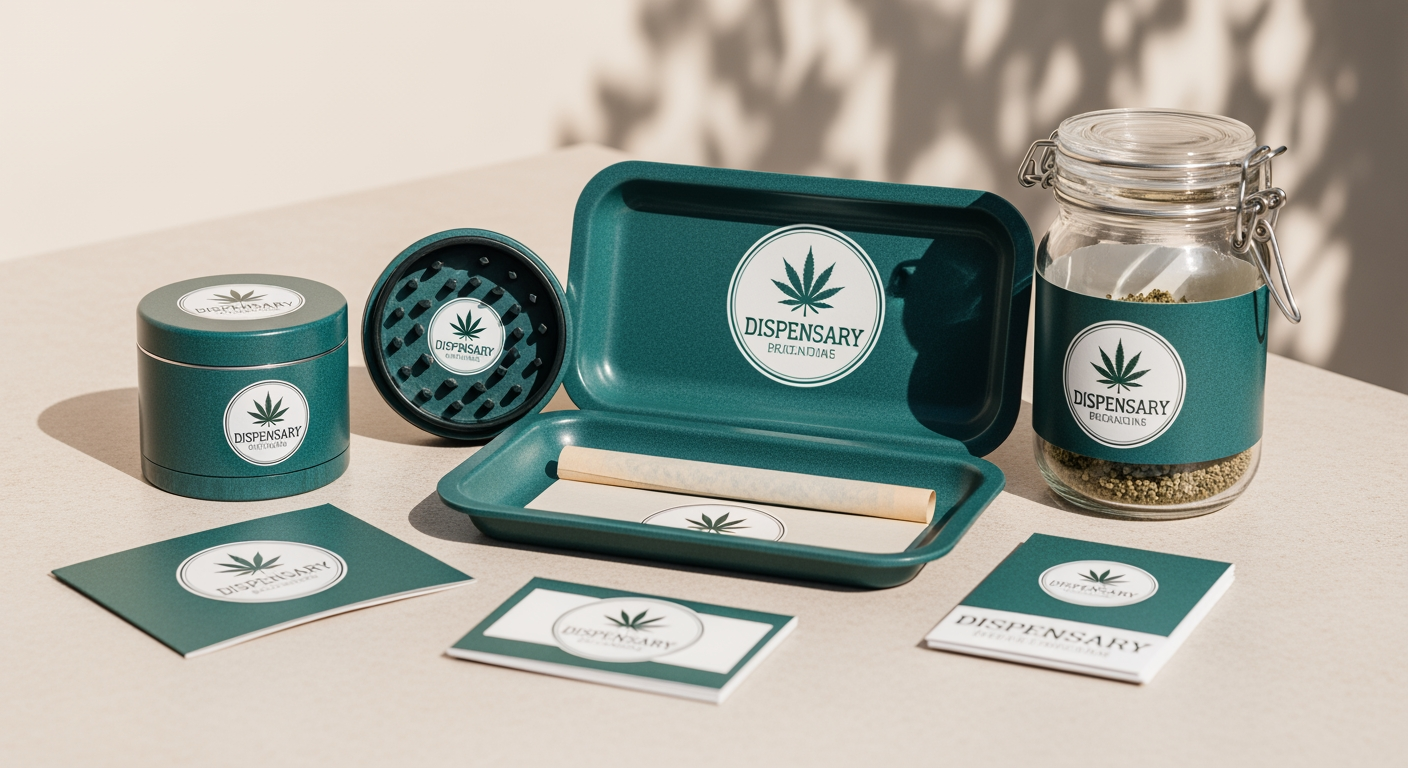
Design Quality and Brand Consistency Impact
Custom accessory ROI depends heavily on design quality and brand consistency - poorly designed branded products create negative brand associations worse than generic alternatives.
Professional Design Investment: Invest in quality graphic design ($200-$800 typical) creating professional branded accessory artwork rather than attempting amateur in-house design. Professional design creates brand equity and perceived quality justifying premium pricing while amateur designs feel cheap undermining value proposition regardless of product quality. The design investment amortizes across thousands of products over multi-year programs making per-unit cost trivial while impact on brand perception and customer willingness to pay remains substantial. Poor design represents false economy - saving $500 on design creates years of suboptimal branded products damaging brand equity worth far more than design savings.
Brand Consistency Across Products: Maintain visual consistency across all custom accessory categories using coordinated color schemes, logo treatments, and design languages. Consistent branding creates cohesive brand identity customers recognize immediately while inconsistent designs across products feel fragmented and unprofessional. Develop brand guidelines documenting color specifications, logo usage, and design standards ensuring consistency as custom program expands across categories and through product refreshes over time. Brand consistency compounds recognition value - customers encountering cohesive branded products across grinders, papers, and trays develop stronger brand associations than scattered inconsistent branding.
Quality Perception and Product Standards: Custom branding magnifies both quality excellence and defects - products bearing your brand reflect directly on overall brand perception in ways generic products don't. Ensure custom accessories meet or exceed quality standards you'd accept for generic equivalents. Substandard products with your branding damage reputation far more than equivalent generic products customers don't associate with your dispensary. Request samples of exact custom products (not just similar items) before approving production runs verifying quality meets brand standards. Reject suppliers unable to provide exact samples or showing quality inconsistencies across sample units.
Packaging and Presentation Quality: Premium branded accessories deserve premium packaging creating unboxing experiences reinforcing quality positioning. Invest in custom packaging, branded bags, or presentation boxes for custom accessories differentiating them from generic commodity products. Packaging investment runs $0.50-$2.00 per unit but creates perceived value increases justifying $5-$10 retail premiums through enhanced presentation and gift-worthiness. The packaging also extends brand impressions - customers keeping branded boxes or displaying packaged products create ongoing brand visibility beyond the accessories themselves.
Testing and Validation Before Full Program Launch
Minimize custom program risk through testing methodologies validating market acceptance and ROI assumptions before major investments.
Pilot Programs with Minimum Orders: Launch custom programs with absolute minimum order quantities testing market response before major commitments. Order 100-unit minimum on single custom grinder design evaluating velocity, customer feedback, and actual margins versus projections. This pilot approach costs $1,000-$2,000 total investment creating manageable downside while providing real market data informing larger program decisions. Successful pilots demonstrating 4-6 month sellthrough and positive customer feedback justify expanding to multiple SKUs and larger quantities. Poor pilot performance prevents expensive mistakes committing to large programs without market validation.
A/B Testing Custom vs Generic: Stock both custom and generic equivalents side-by-side initially comparing customer preferences and price sensitivity. If custom grinders priced at $39.99 outsell generic equivalents at $24.99, market validates premium pricing and custom value proposition. If customers consistently choose generic options despite custom availability, reconsider custom program economics and positioning before expanding. The comparative testing provides objective market feedback more valuable than internal assumptions about customer behavior and pricing tolerance.
Customer Feedback and Perception Research: Survey customers purchasing custom accessories understanding what drove buying decisions, perceived value, and satisfaction levels. Ask whether branded aspect influenced purchase and what premium if any they'd accept for branded versus generic. This qualitative feedback helps refine pricing, design, and positioning for subsequent custom product launches. Many dispensaries discover customer motivations differ from assumptions - some buy custom products for collectibility rather than branding, others for perceived quality regardless of brand, while others genuinely value dispensary brand association. Understanding these motivations helps optimize custom programs toward actual customer preferences.
Competitive Response Monitoring: Track whether competitors respond to successful custom programs through their own branded accessory launches. Competitive imitation validates category viability while requiring ongoing differentiation through design quality, exclusive products, and brand strength. If multiple competitors quickly launch similar custom programs, first-mover advantages diminish requiring excellence in execution and branding rather than just existence of custom program creating differentiation. Use pilot period observing competitive reactions before major program commitments.
Financial Modeling and ROI Calculation Framework
Rigorous financial analysis quantifies custom accessory program returns including both tangible margins and estimated branding value creating defendable business cases.
Direct Margin Improvement Calculation: Calculate incremental gross profit comparing custom versus generic alternatives accounting for all costs including setup fees, higher minimums, and carrying costs. Example: 200 custom grinders wholesale at $16 ($3,200) plus $150 setup ($3,350 total) retailing at $39.99 generate $7,998 revenue and $4,648 gross profit (58%). Equivalent 200 generic grinders wholesale at $10 ($2,000) retailing at $24.99 generate $4,998 revenue and $2,998 gross profit (60%). Custom program generates $1,650 incremental gross profit (55% improvement) despite higher costs and lower margin percentage. This calculation quantifies direct financial benefit before considering branding value.
Customer Lifetime Value Impact Estimation: Estimate custom accessory impact on customer retention and purchase frequency. Conservative assumption: branded merchandise improves 12-month retention 10% and purchase frequency 5%. If baseline customer lifetime value is $1,200 over 18 months, 10% retention improvement creates $120 incremental LTV. Capture 20% of this benefit ($24) attributable to branded merchandise exposure. Across 100 customers purchasing branded accessories, this creates $2,400 total LTV improvement. Include this estimated benefit in ROI calculations acknowledging uncertainty while quantifying strategic value beyond direct margins.
Marketing Value Equivalent Calculation: Estimate cost of achieving equivalent brand impressions through paid advertising. If 500 customers using branded grinders daily generate 180,000+ annual brand impressions, calculate equivalent Facebook or Instagram advertising costs achieving similar exposure (typically $1,500-$4,000 depending on market). Include portion of this marketing value equivalent in custom program ROI recognizing branded merchandise delivers advertising-like impressions without ongoing costs. While imperfect methodology, it quantifies branding value in financially meaningful terms supporting investment justification.
Total ROI and Payback Period: Combine direct margin improvements, estimated LTV impact, and marketing value equivalent calculating total program return. Custom grinder program costing $3,350 generating $1,650 direct margin improvement, $2,400 estimated LTV benefit, and $2,000 marketing value equivalent creates $6,050 total benefit. ROI = (($6,050 - $3,350) / $3,350) × 100 = 81% return. Payback period = $3,350 investment / $505 monthly benefit = 6.6 months. This comprehensive analysis justifies custom programs through multi-dimensional value creation versus simplistic margin comparison.
Scaling Custom Programs: Expansion Strategy
Successful pilot programs create opportunities for strategic expansion across categories, SKUs, and locations maximizing program value while managing complexity.
Sequential Category Introduction: Launch custom programs sequentially rather than simultaneously across all categories. Start with grinders (highest ROI, moderate minimums), expand to trays after 6-12 months of grinder success, then consider papers and storage once multi-category program management capabilities are proven. Sequential introduction allows learning from each category optimizing subsequent launches while preventing overwhelming complexity and excessive simultaneous inventory investment. Each category success builds confidence and cash flow supporting next stage expansion.
SKU Proliferation Management: Resist temptation proliferating excessive custom SKUs creating inventory complexity and diluted velocity. Maintain 2-4 custom options per category maximum serving different price points and customer preferences without fragmenting demand across too many choices. Excessive SKU count creates inventory management burden and reduces turnover velocity on individual items hurting overall program economics. Focus on fewer SKUs achieving strong velocity rather than comprehensive selection sitting stagnant.
Seasonal and Limited Edition Strategy: Create seasonal custom designs or limited editions generating collectibility and urgency. Holiday-themed branded accessories, anniversary editions, or artist collaborations create purchase motivation beyond standard branded products. Limited availability prevents permanent inventory commitments while premium pricing captures collector segments willing to pay for exclusivity. This strategy adds excitement to custom programs while managing inventory risk through smaller production runs and time-limited availability creating clearance urgency.
Multi-Location Rollout Planning: Multi-location operators should pilot custom programs at highest-volume locations demonstrating success before system-wide rollout. Single-location proof of concept informs inventory quantities, pricing, and operational procedures for broader implementation. Successful pilots create internal champions and operational learnings preventing expensive mistakes during broad rollout. Failed pilots identify problems with limited exposure allowing course correction before major investments across all locations.
Conclusion: Custom Accessories as Strategic Investment
Custom-branded cannabis accessories deliver measurable ROI through improved margins, enhanced customer lifetime value, marketing value equivalent, and competitive differentiation creating multi-dimensional returns justifying upfront investments and minimum order commitments. Success requires rigorous financial analysis quantifying both direct profitability and strategic branding benefits while managing inventory risk through conservative forecasting and pilot program validation.
Dispensaries treating custom accessory decisions as strategic branding investments rather than simple product procurement achieve superior outcomes through thoughtful design, quality standards, and program management versus those pursuing custom products solely for margin improvement. The most valuable returns come from brand equity building and customer loyalty development compounding over years rather than immediate margin capture on individual transactions.
While not appropriate for every dispensary - particularly undercapitalized startups or locations with extremely price-sensitive customer bases - custom accessory programs create defensible competitive advantages and meaningful profitability for established dispensaries serving quality-focused customers in competitive markets. The key lies in rigorous ROI analysis, realistic expectations, and execution excellence creating branded products customers value enough to pay premium pricing while proudly displaying dispensary brand associations.
Ready to explore custom-branded accessory programs for your dispensary creating both immediate margin improvements and long-term brand equity? Explore MunchMakers' complete custom branding solutions across grinders, rolling papers, trays, and storage with expert guidance helping you develop financially sound custom programs optimized for your specific market, customer base, and business objectives.