
Weed Grinder Prices 2025: Budget to Premium Wholesale Buyer's Guide
Weed Grinder Prices 2025: Budget to Premium Wholesale Buyer's Guide
Understanding grinder pricing structures, from $5 budget options to $200+ premium models, enables dispensaries to stock appropriate selections meeting diverse customer needs while optimizing profit margins. Grinder prices correlate directly with materials, manufacturing quality, features, and brand reputation - but the relationship isn't always linear. Smart wholesale buyers identify value opportunities where quality exceeds price expectations.
This comprehensive guide breaks down grinder pricing by material and feature categories, reveals wholesale cost structures, highlights exceptional value products, and explains how dispensaries should position grinders across budget, mid-range, and premium tiers to capture maximum market share while maintaining healthy margins.
Grinder Price Ranges: Budget to Premium Breakdown
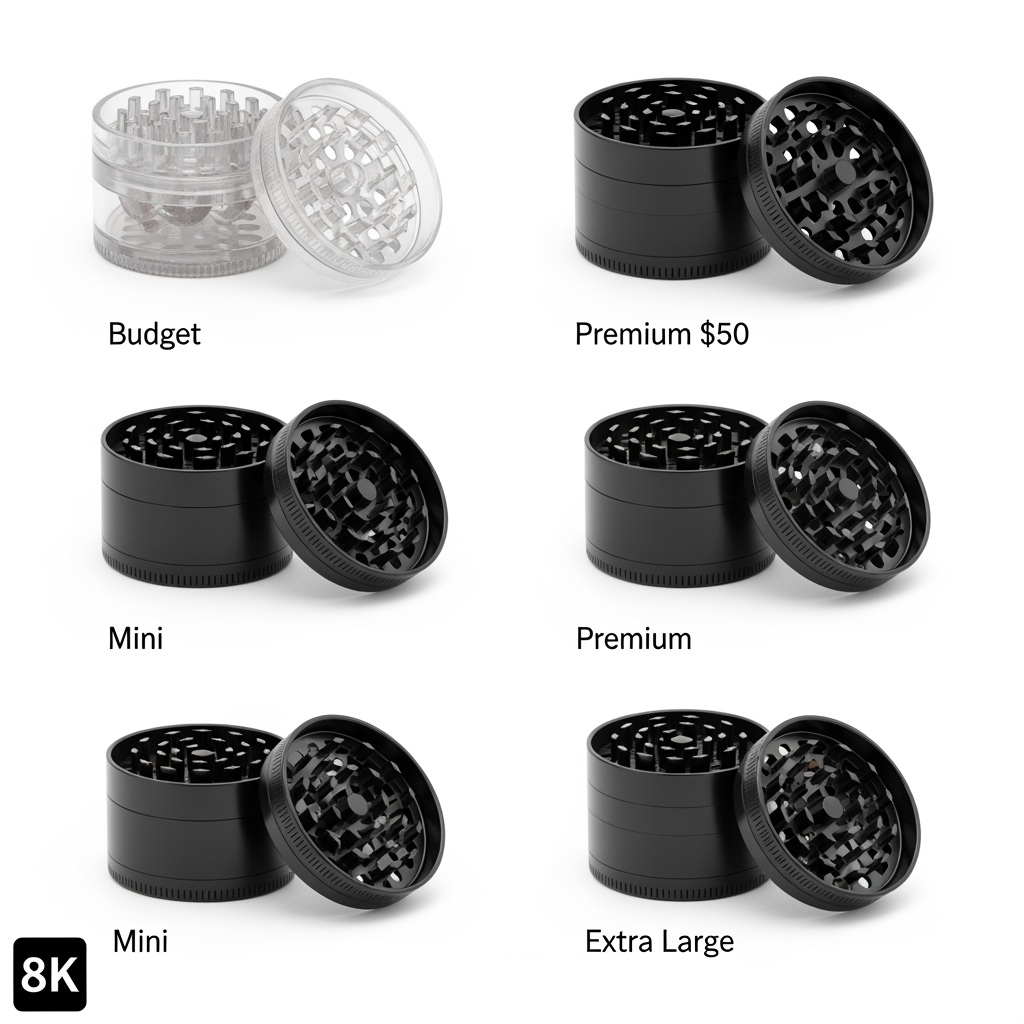
Budget Tier ($5-20 Retail, $2-8 Wholesale): Plastic and basic aluminum grinders dominate this segment. While quality varies dramatically, several manufacturers produce functional budget grinders serving price-sensitive customers and beginners adequately. Wholesale costs of $2-5 against $10-15 retail create 60-70% margins.
Stock budget grinders as entry-level options and impulse purchases. However, train staff to upsell: "This $12 grinder works fine, but for $10 more, this aluminum model will last years instead of months." The customer who buys budget often returns to upgrade - capture both transactions.
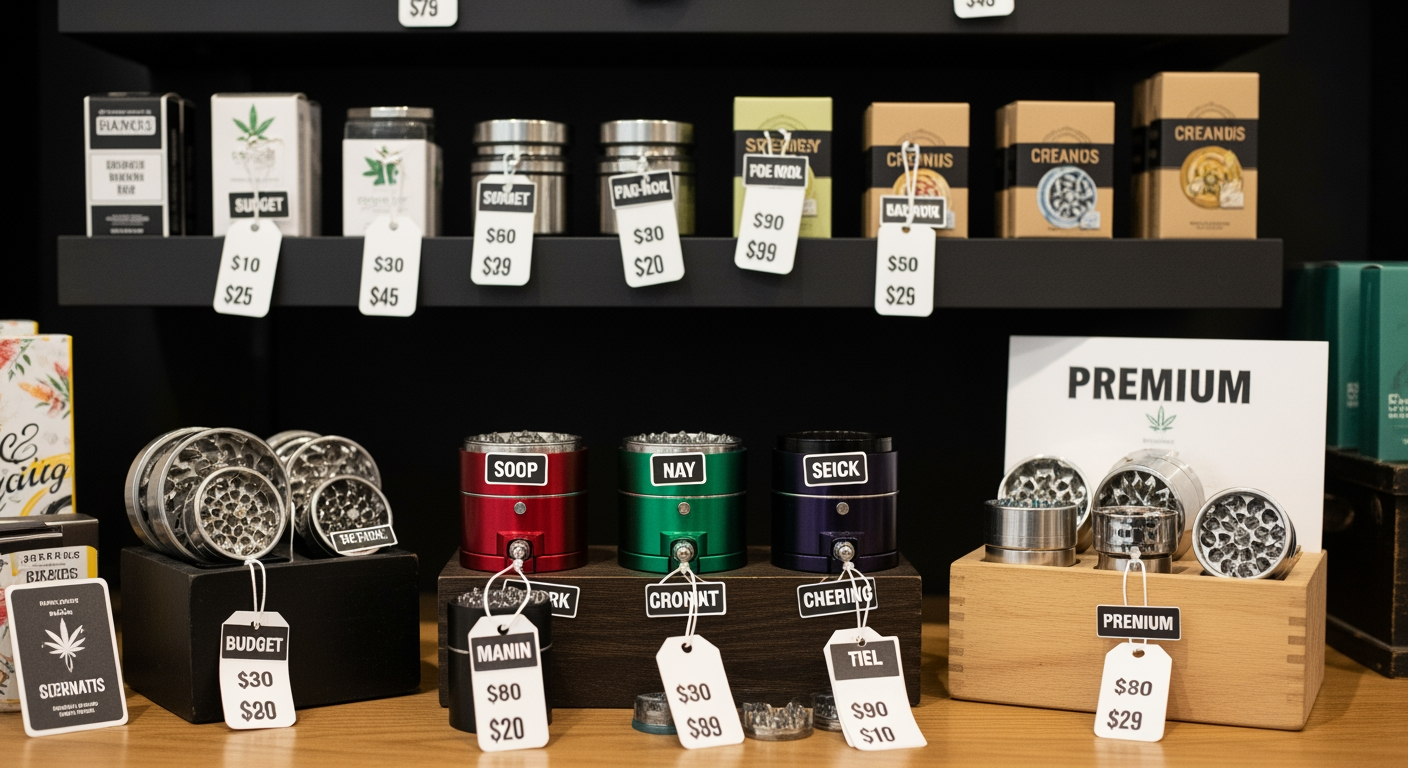
Mid-Range Tier ($20-50 Retail, $8-20 Wholesale): Quality aluminum grinders from reputable manufacturers occupy this sweet spot. These grinders deliver excellent performance, durability, and features (4-piece designs, kief catchers, smooth threading) at accessible pricing. This tier generates the highest sales volume for most dispensaries.
MunchMakers' custom aluminum grinders exemplify mid-range value - professional quality with custom branding at wholesale costs enabling $25-35 retail pricing with 55-65% margins. Stock extensively in this tier as it serves the broadest customer base.
Premium Tier ($50-100 Retail, $20-40 Wholesale): Santa Cruz Shredder, Brilliant Cut Grinder, and premium custom options deliver superior machining, aerospace-grade materials, and innovative features. These grinders provide the finest, most consistent grind quality and last decades with proper care.
Position premium grinders as investments: "This $75 grinder seems expensive compared to $20 options, but it'll outlast five cheap grinders while providing better results every single time." Premium grinder buyers are often your highest-value customers - cross-sell them premium rolling trays and quality ashtrays to create complete premium setups.
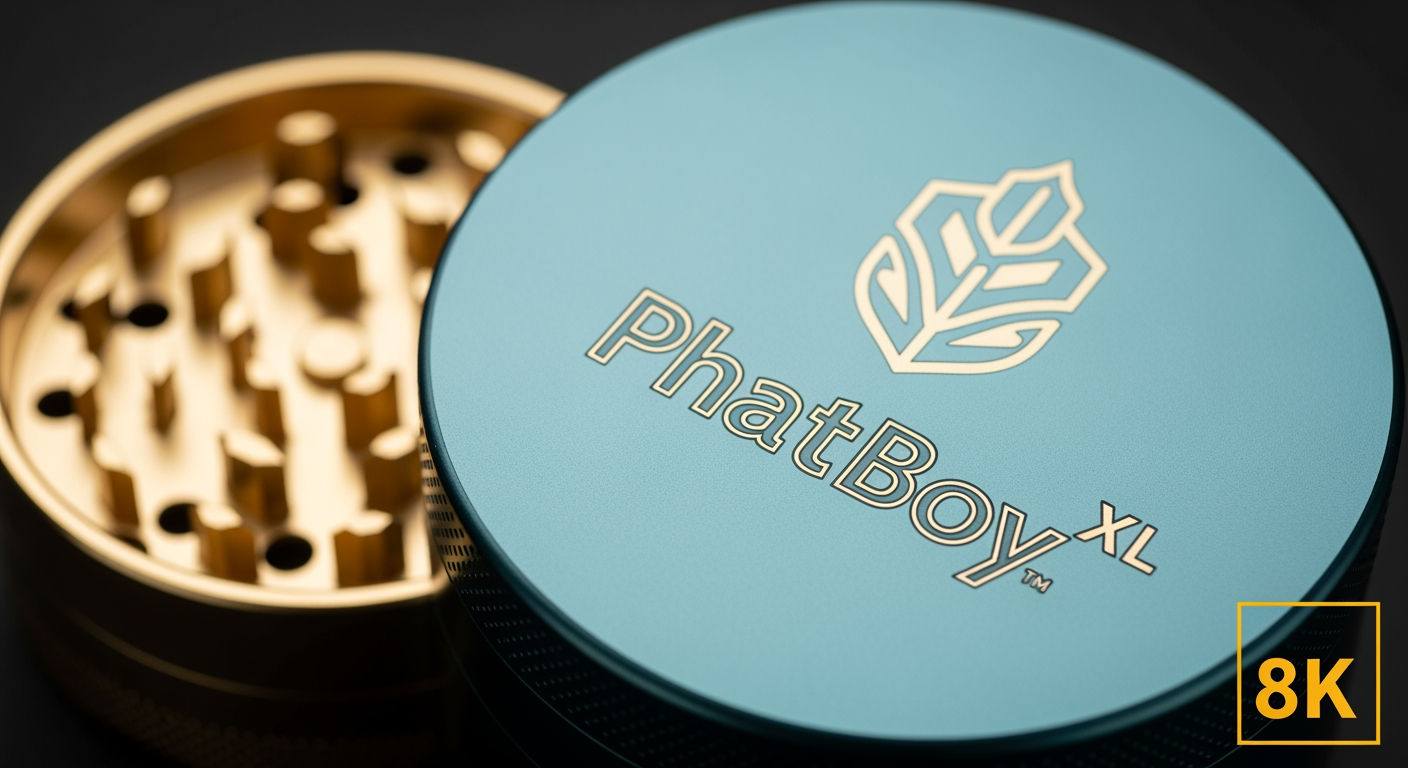
Ultra-Premium Tier ($100-200+ Retail, $40-80 Wholesale): Specialty materials (titanium, stainless steel), extreme sizes, and limited editions command ultra-premium pricing. The PhatBoy XL and similar large-capacity grinders serve commercial users and serious connoisseurs willing to pay for maximum capacity and durability.
Material Impact on Pricing: Plastic to Titanium
Plastic/Acrylic ($5-15): Lowest manufacturing costs create budget pricing. However, plastic teeth dull quickly, bodies crack with normal use, and cheap plastics may shed particles into ground herb. Reserve plastic for ultra-budget customers understanding quality trade-offs.
Wholesale plastic grinders cost $1-4. While margins appear attractive (70%+ on a $2 grinder retailing at $8), customer dissatisfaction and returns often eliminate profit advantages. Stock minimally unless your market specifically demands ultra-budget options.
Zinc Alloy ($10-25): Mid-grade metal alloy grinders offer significant durability improvements over plastic at modest price increases. Wholesale costs of $3-8 support $12-20 retail pricing with healthy margins. These grinders adequately serve casual users without premium expectations.
However, zinc alloys vary widely in quality. Test samples before bulk ordering - poorly formulated alloys develop sharp edges, strip threads, and exhibit surface degradation affecting both performance and safety.
Aluminum ($15-60): Aircraft-grade and anodized aluminum grinders represent the industry standard for good reason. Wholesale costs of $6-25 depending on size, chambers, and features support $18-50 retail pricing maintaining 50-60% margins while delivering quality customers recognize and appreciate.
Stock the majority of your grinder inventory in quality aluminum. Four-piece aluminum grinders with kief catchers satisfy most customer requirements and price expectations while providing margins funding your accessory category profitability.
Stainless Steel / Titanium ($60-200+): Premium metals command premium pricing. Wholesale costs of $25-80 support $65-180 retail pricing. These materials appeal to customers seeking the absolute best regardless of cost - medical professionals, connoisseurs, and customers viewing grinders as lifetime investments rather than consumables.
Size Matters: Pricing Across Grinder Dimensions
Mini Grinders (1.5"-2" diameter, $8-20): Compact grinders including keychain models serve portable and discrete consumption needs. Wholesale $3-8, retail $10-18. These are excellent impulse buys and promotional items due to low wholesale costs enabling volume distribution.
Standard Grinders (2"-2.5" diameter, $15-50): The universal standard serving 70% of customers. Wholesale $6-20, retail $18-45. This size provides optimal balance of capacity, portability, and price. Your deepest inventory should be standard-sized quality aluminum grinders.
Large Grinders (2.75"-3.5" diameter, $30-80): Increased capacity and grinding surface area serve heavy users and commercial applications. Wholesale $12-30, retail $35-75. Stock moderately - these serve specific customer segments rather than mass market.
Extra-Large / Jumbo Grinders (4"+ diameter, $60-150+): Specialty products like MunchMakers PhatBoy XL and Santa Cruz Jumbo serve commercial processors, dispensary prep areas, and enthusiasts wanting maximum capacity. Wholesale $25-60, retail $70-140. Stock as specialty items generating buzz and serving niche customers.
Cool and Unique Grinders: Novelty Pricing Strategies
Beyond functional considerations, "cool" grinders with unique designs, colors, or features command premium pricing through novelty value and aesthetic appeal:
Color and Finish Variations: Anodized colors (blue, red, purple, gold) or special finishes (matte black, brushed metal, rainbow) add $2-5 to wholesale costs but support $8-15 retail premiums. Stock core models in multiple colors to offer personalization without separate SKUs for every variant.
Novelty Designs: Skull-shaped grinders, cannabis leaf cutouts, and pop culture themed designs appeal to gift buyers and customers seeking conversation pieces. Price these 20-30% above equivalent functional grinders, positioning as premium/specialty items rather than standard inventory.
LED and Electronic Features: Illuminated grinders and electric grinders command significant premiums. Electric grinders wholesale at $15-35 support $40-80 retail pricing while LED models add $5-10 to costs and $15-25 to retail. These products generate excitement and appeal to tech-oriented customers.
Wholesale Grinder Sourcing and Supplier Selection
Direct Manufacturer Relationships: Partnering with manufacturers like MunchMakers for custom-branded grinders provides best wholesale pricing, design flexibility, and quality control. Minimums typically start at 50-100 units with per-unit costs decreasing substantially at 250+ quantities.
Custom branding on mid-range aluminum grinders costs $6-10 wholesale in 100-unit orders, supporting $22-30 retail pricing with 65-70% margins while building your brand equity through products customers use daily.
Distributor Purchasing: Cannabis accessory distributors (Greenlane, etc.) offer variety and convenience with $200-500 minimum orders versus $1,000-2,000 manufacturer minimums. However, distributor pricing runs 15-25% higher than direct. Calculate whether convenience justifies the margin impact.
Brand-Direct Partnerships: Some premium brands (Santa Cruz Shredder, Phoenician) offer direct dealer accounts with wholesale pricing, marketing support, and exclusive releases. These partnerships work well for premium-focused dispensaries wanting recognized brands.
The Biggest Grinder Opportunity: Commercial and Novelty Appeal
Extra-large grinders create buzz, generate social media content, and serve legitimate commercial needs. The Tahoe Grinder Company's 16" "World's Largest" grinder and MunchMakers' PhatBoy XL exemplify this category's unique positioning:
Commercial Applications: Dispensaries use large grinders for pre-roll production, eliminating repetitive grinding labor. The $100-200 investment pays for itself in labor savings within weeks for dispensaries rolling 100+ pre-rolls daily.
Marketing Value: Oversized grinders generate Instagram posts, TikTok videos, and customer conversations. Stock one as a display piece even if you never sell it - the "World's Largest Grinder" sign attracts attention and starts conversations leading to accessory sales.
Niche Sales: Cannabis event organizers, large consumption communities, and commercial cultivators represent legitimate customer segments for extra-large grinders. Market these through your B2B channels rather than retail floor.
Conclusion: Value-Based Grinder Category Management
Grinder pricing follows quality curves, but strategic buyers identify value opportunities where performance exceeds cost. Stock balanced selections spanning budget entry points to premium investment pieces, understanding each tier serves different customer segments and purchase motivations.
Focus inventory on the $15-40 range where most customers shop, provide budget options for price-sensitive buyers, and carry premium selections for quality-focused consumers. Most importantly, train staff to guide customers to appropriate grinders based on usage patterns rather than simply presenting cheapest or most expensive options.
Grinder categories represent 8-12% of accessory revenue in well-managed dispensaries while maintaining 55-65% profit margins. Optimizing this category through strategic sourcing, staff training, and custom branding creates meaningful bottom-line impact.
Ready to develop custom-branded grinder programs at wholesale pricing? Explore MunchMakers' complete grinder line from budget to premium with low minimums and full custom branding support.