Making your own rolling papers can be a fun and interesting project. At first, it might seem like a weird idea, but it's actually a great way to learn about what goes into making them. Maybe you're curious about the process, or maybe you've run out of papers at a bad time and want to know how to make your own. Whatever the reason, it's definitely possible to make your own rolling papers, and it can be a rewarding experience. You'll get to see firsthand what goes into making them, and you might even discover a new hobby. So, if you're up for the challenge, let's get started and see how it's done.
So, let's get one thing straight - this isn't something you can rush through in just a few minutes. To get good results, you need the right stuff, be patient, and don't be afraid to try a few times. At first, things might not go as planned, and your attempts might not turn out perfectly - they might not burn right or hold together like they should. But that's okay, it's all part of the process. The key is to keep at it until you get a feel for how it's supposed to work, and then things will start to fall into place.
Why Bother Making Them From Scratch?
You've got a few different types of people who try this out. Some are just curious and want to see if it's possible. Others are super into control and want to know exactly what's in their stuff - no surprises, no extra ingredients. And then there are those who are reading this late at night, like right now, and just really need a solution because they're all out.
One of the main advantages of making your own papers is that you have complete control over what goes into them. Commercial papers often include additives like calcium carbonate, which can slow down burning, and potassium nitrate, which can actually make them burn faster. They may also contain various binders and bleaching agents. While some brands are definitely better than others, when you make your own papers, you get to start from scratch and choose every single ingredient that goes into them. This way, you can avoid using anything you don't want or need, and create a product that's tailored to your specific needs and preferences. By leaving out all the extra stuff, you can end up with a much simpler and more straightforward product.
Making your own is not just about the end result, it's also about the process. Many people enjoy the fact that they get to create something from scratch, starting with the paper and working their way up. This hands-on approach can be really appealing to some, and if that's you, then this guide has got you covered. It will walk you through everything you need to know, so you can make your own with confidence. Whether it's the satisfaction of creating something with your own hands or the joy of customizing every detail, rolling your own can be a really rewarding experience.
What Paper Actually Works
The material you pick is crucial - it affects how smoothly it rolls, how consistent the burn is, and the flavor it gives off. This is usually where DIY projects take a wrong turn.
The three materials worth using are rice paper, hemp paper, and flax paper. Each has different characteristics worth knowing before you pick one.
Rice paper is really popular for making rolling papers because it's super thin and almost see-through. It burns nice and slow, and doesn't leave a lot of ash behind. Plus, it doesn't change the taste of what you're rolling, which is a big plus. The only downside is that it's pretty delicate, so if it gets a little wet, it can be tricky to work with. But you can find unbleached rice paper at craft stores or online, and it comes in sheets that are perfect for this kind of project.
Hemp paper has a bit more texture and is slightly thicker than rice paper, making it easier to handle. However, this also means it burns a little differently. Some people notice a faint earthy or sweet quality to hemp paper, although this is quite subtle. If you're already using hemp products, hemp paper is a natural choice to keep your setup consistent. Plus, it's widely available in its natural, unbleached form, which is a great option for those looking for a more organic choice. Overall, hemp paper is a good option for those who want a unique texture and a consistent hemp-based setup.
Flax paper isn't as popular as other types, but some people really like it because it's super thin and burns very cleanly. The fibers from the flax plant make a really thin sheet that's actually stronger than you'd think. You might not be able to find it at your local craft store, but there are specialty paper suppliers online that carry it.
One practical note: thickness affects how you roll. Thin papers like rice and flax demand clean, dry hands and confident rolling — any hesitation and the paper tears or wrinkles. Hemp paper is more forgiving when you're still learning.
Don't Use These
Printer paper, newspaper, tissue paper, pages from books or magazines — none of these are safe. They contain inks, optical brighteners, bleach compounds, and other chemicals that combust into toxic fumes. The fact that paper looks plain doesn't mean it's clean to burn. Aluminum foil and wax paper are also off the table. Receipt paper is worth a special mention: it's typically coated in BPA or BPS, both of which are harmful when heated. Stick with food-grade or craft-grade rice, hemp, or flax paper only.
Cutting and Sizing the Paper
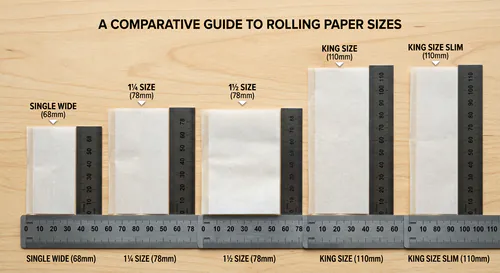
When it comes to rolling papers, the standard size is usually around 3 inches in length and 1.5 inches in width - that's roughly 70mm by 36mm. This size works well for most people, but if you like your joints a bit bigger, you can always cut them a bit longer. One thing that tends to stay the same, no matter the length, is the width - 1.5 inches is pretty standard, because it's just the right amount of paper to wrap around your herb and still have enough left over to seal the edge.
To get the best results, use a ruler and a really sharp craft knife or scissors. If your scissors are dull, they'll pull and squash the edge of the paper, which can make it tricky to work with later on. When you're using a craft knife, it's a good idea to cut against a metal ruler on a special cutting mat - having a straight edge really makes a difference. If your edges are all jagged or uneven, it can be much harder to roll and seal your paper properly.
To get the best results, lay your paper down flat after cutting and get rid of any wrinkles. You can use your finger or something flat to make it smooth. What you want is a flat piece of paper that's even all over, with no folds that could make it burn unevenly. Even a tiny crease that runs along the length of the paper can cause problems, making one side of the joint burn faster than the other.
When you're working on a project that requires multiple papers, try stacking them together and cutting them all at once. This approach can save you time and help you get more consistent results, so all your papers are the same size.
Making Filter Tips
Having a filter tip is really helpful, even if it's not absolutely necessary. It gives you a solid thing to grip, stops herbs from getting sucked into your mouth, and serves as a guide when you're rolling the paper, which is especially useful when you're just starting out. This makes the whole process a lot easier and more manageable.
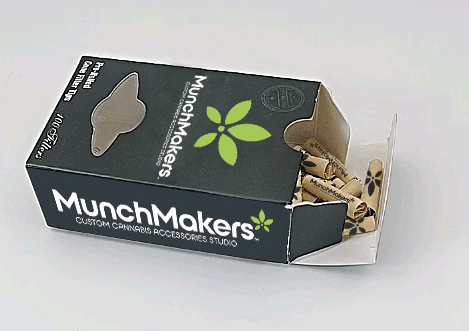
To make your own filter tips, you can use a small piece of thin cardstock, like a business card. Start by cutting a strip that's about half an inch wide and an inch long. Next, fold one end of the strip into an accordion-style W shape, repeating the fold two or three times. After that, take the remaining cardstock and wrap it around the outside of the folded part. This will give your filter tip its shape. The accordion section is designed to let air pass through, while the wrapped outer portion helps hold everything in place. You can also find pre-cut filter tips at any smoke shop if you prefer not to make your own.
When you're getting ready to roll, make sure the tip is snug on your paper. If it's too loose, it will just fall out, which is annoying. On the other hand, if it's too tight and hard to get on, you can trim it a bit. Taking a few extra seconds to get this right is really worth it - having a tip that fits just right makes the whole process a lot easier and less frustrating. You'll be glad you took the time to get it just right.
Adding Flavor (Optional)
When it comes to adding flavor, it's really important to be careful. This step is optional, so don't feel like you have to do it. If you do decide to add flavor, make sure to use essential oils or extracts that are safe to eat - things like vanilla, cherry, mint, or citrus are all great options. The key thing to remember is to only use "food-grade" essential oils. A lot of essential oils that are sold for aromatherapy or skincare have extra ingredients or concentrations that aren't meant to be eaten, so be sure to choose the right kind.
When working with this technique, it's best to start with a tiny amount - just one drop will do. Dilute it in a tablespoon of water and use a light touch to brush it across the surface of several sheets of paper. This is usually enough to get the desired effect. Be careful not to overdo it, as too much of this substance can give the paper a harsh, chemical smell that overwhelms everything else. And if you add too much liquid, the paper can become fragile and difficult to handle, which is definitely not what you want.
When it comes to flavors, the ones that are based on fruits tend to be a good choice because they are light and don't stay with you for too long. On the other hand, flavors that are heavily floral or spice-based can be too much to handle. So, if you're just starting out, it's a good idea to begin with something mild, like vanilla or citrus, and see how you like it before trying out other options. This way, you can get a feel for what works for you and what doesn't, and then you can experiment with other flavors from there.
Some individuals prefer to skip using oils altogether and opt for flavored honey as an alternative adhesive. This method allows for a touch of sweetness to be added without having to treat the entire paper, which can be quite convenient. By using flavored honey, you can achieve a subtle sweetness that enhances the overall experience, all while avoiding the need to work with oils.
Rolling the Paper
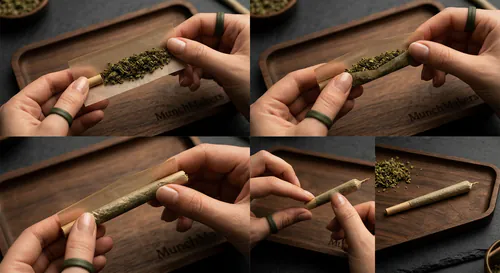
To start, position the filter tip at one end of the paper, making sure it's securely in place. Next, take your ground herb and create a line down the center of the paper, starting from the filter tip and working your way down to the other end. It's really important to distribute the herb as evenly as possible - if there are any thick or thin spots, they'll affect how the herb burns, causing uneven burns later on. Try to get a consistent amount of herb all along the line, from the filter tip to the far end of the paper.
To get started, take the paper and begin moving it back and forth between your thumbs and fingers. At this point, you're not actually rolling it, but rather shaping it to fit the herb. The goal is to compress the herb into a cylinder and get the paper to mold around it before you start rolling. This step is crucial, and many beginners tend to skip it, which is why their joints often end up lumpy or too loose. By taking the time to shape the paper, you'll be able to create a much tighter and more even roll. It's all about getting the paper to conform to the herb, and this pre-rolling step makes all the difference.
To roll your herb, start by holding it firmly between your fingers, making sure it's packed in and cylindrical in shape. Next, take the edge of the paper that's closest to you - this is the bottom edge - and tuck it under the herb. Now, begin rolling upwards, keeping a gentle but firm tension on the paper so it stays tight against the herb as you roll. Keep rolling until you've got just a thin strip of paper sticking up at the top edge.
To get a good seal, run your tongue over the edge and press down on it. If you're using something sticky like honey, put it on the strip before you roll it up all the way.
You want it to be snug, but not too snug. It should be tight enough that it doesn't feel loose or floppy, but still allows for a decent airflow. If it's too tight, it's like trying to breathe through a tiny straw - it's just too hard. You should be able to inhale through it pretty easily before you light up. Think of it like a gentle balance - not too loose, not too tight, just right. If it's too dense, it's no good, like trying to suck air through a coffee stirrer. But if it's just right, you'll know it.
Sealing Without an Adhesive Strip
When it comes to commercial papers, you'll often notice a thin line of dried adhesive along one edge, known as a gummed strip. However, DIY papers are different - they don't have this strip, and that's what makes them a bit more challenging to work with in a practical sense.
Honey is a pretty simple solution. Just a tiny bit, applied with your finger or a small brush, works really well on the edge. It seals things up nicely, burns cleanly, and gives off a faintly sweet smell. The key is to not use too much - just a thin layer will do. If you use too much honey, it can make the edge all sticky and slow to dry.
When you're working with paper, saliva can actually be a pretty useful tool. If you leave a bit of overlap, about a quarter of an inch, the saliva can help hold things in place. But if you don't leave enough overlap, it just won't work - the paper will peel back as soon as it dries. So, make sure to press the edge down firmly onto the paper underneath and hold it there for a few seconds, until it bonds together. This way, you can get a pretty strong hold, even with just saliva.
You can also use a paste made from flour and water as an alternative. To make it, simply combine a tiny amount of flour with a few drops of water, mixing until you get a thin, consistent paste. Then, apply this paste to the edge that needs to be sealed and let it dry completely before rolling it up. This method has its advantages - it burns cleanly and provides a good seal. However, it does add an extra step to your process and you have to wait for the paste to dry before you can smoke.
To get the best results, make sure to seal the edge completely, from the filter tip all the way to the open end, without leaving any gaps. If you don't seal it properly, you might end up with an uneven burn that runs along the unsealed side, or the whole thing could unravel.
Let It Dry Before You Light It
When you're getting ready to smoke, make sure your paper is completely dry. If you've added anything like honey, saliva, or a flavored liquid to it, give it some time to dry out first. Even if it looks okay, a damp paper can burn unevenly and taste pretty bad. The problem is that the moisture turns into steam when you light up, and that can really mess with the way it draws. So, just be patient and let it dry out before you smoke it - it's worth the wait.
Waiting a bit is a good idea. Thirty minutes is a decent amount of time, but an hour is even better. If you've added any flavorings or liquids, it's a good idea to set it aside for a few hours or even overnight. This way, you can be sure everything is okay. There's no harm in waiting, so it's always better to be safe than sorry.
To speed up the drying process a bit, you can place the finished joint in a spot with some airflow. Just make sure it's not in direct sunlight or near any heat sources, as this can cause the thin paper to become brittle. Simply putting it on a table in a dry room is perfectly fine.
Common Problems and How to Fix Them
A few issues come up consistently when people first try this. Most have straightforward fixes once you know what you're looking for.
Burning unevenly is usually because of how the herb is spread out. If it's not packed tightly and evenly from one end to the other, some parts will burn faster than others. So, when you're putting the herb in the paper, make sure to spread it out carefully and then check it with your fingers before rolling it up. You should be able to feel any parts that are lumpy or too thin, and you can fix them before you roll it up. This way, everything burns at the same rate and you don't get any hot spots.
When you're smoking and one side is burning way faster than the other, it's like the paper is getting ahead of itself on that side. This usually happens because the joint was rolled a bit tighter on one side, or maybe it just didn't get lit evenly. If you notice this happening, just wet your finger and gently touch the edge of the faster-burning side - this should slow it down a bit and give the other side a chance to catch up. Another thing that can help is relighting the side that's burning slower, just to get everything back on track.
When a joint comes apart while you're smoking, it's usually because the seal didn't work right or it wasn't rolled tight enough. If you're using DIY papers, the problem is often with the seal. If your honey or paste isn't sticking, try washing your hands, putting more adhesive on, and pressing the edge down for 10 whole seconds. How long you press it matters.
When you're rolling and the paper starts to tear, it's usually because of one of two reasons. Either the paper is too wet, or you're not applying the pressure evenly. This is especially true for rice paper, which can be really sensitive. If your hands are even slightly moist, it can cause the paper to tear. So, make sure you have a dry cloth handy to wipe your hands with before you start rolling. And when you do start, try to apply even pressure with both hands, rather than pressing down harder on one side than the other. This should help prevent the paper from tearing and make the rolling process a lot smoother.
If a joint is too tight, it's usually because it's been packed too densely. Unfortunately, there's no way to fix this once it's happened - you'll have to start over, unroll the joint, and redo the herb distribution. To avoid this issue, remember that the herb will compress even more as you roll it up, so it's better to start with a slightly looser pack than you think you need.
Things That Help When You're Learning
Keeping your hands dry makes a bigger difference than most people expect. Wet or sticky fingers compromise both the paper and your grip. Keep a dry cloth nearby and wipe your hands before you start and between attempts.
When you're first starting out, it's better to use less herb. This might seem weird, but trust me, it's easier to work with. You can always add more later, but for now, just use a small amount. This will make it way easier to roll your paper into something that actually works. As you get better at rolling, you can start adding more herb, but for now, keep it light. It's all about finding that balance and getting a feel for how the paper rolls. So don't overdo it, just start with a little and see how it goes.
Start by getting a feel for the paper. Take a spare piece and practice rolling it without adding anything. Just focus on getting the motion right - it should be smooth and steady, not jerky or hesitant. Keep practicing until it feels like second nature. You'll soon get a sense of how much pressure the paper can take before it tears, and that will help you get it just right.
Don't be stingy with the paper, cut more than you think is necessary. Chances are, your initial attempts won't turn out as planned, but that's completely okay - it's all part of the learning process. Having a generous supply of paper on hand will allow you to practice and experiment without worrying about running out of materials, so go ahead and give yourself the freedom to make mistakes and try again.
A Few Alternatives Worth Knowing
If making papers from scratch sounds like more work than you want to take on, there are some alternatives that people actually use.
Dried rose petals can be used, but they need to be dried just right. To do this, place the fresh petals on a piece of parchment and put them in the oven on a low heat, around 200°F, for a few minutes. You want them to be dry and flexible, but not too brittle. They burn slowly and give off a nice smell, but they can be a bit tricky to work with because they don't have a flat surface like paper does.
You might be surprised at how useful corn husks can be. The ones used to make tamales can actually be pretty handy once they're dry. All you have to do is soak them in water to make them flexible, shape them however you want, and then let them dry out. They're a natural product, so they burn really cleanly, and they're way sturdier than something like rose petals. This makes them a great option for certain projects. Plus, they're just really versatile - you can shape them into all sorts of things, and they'll hold their form pretty well. So, even though they might not sound like much at first, corn husks are definitely worth considering if you need a natural, reliable material.
Pre-rolled cones are the obvious shortcut. You just fill them, tap them down, and fold the tip closed. No rolling skill required. If you're regularly making joints and this whole DIY process doesn't appeal to you as a regular habit, cones are the practical choice.
When you're in a pinch and all you have is an apple, you can actually make a pretty decent pipe. Just take a pen and poke a hole through the top to create a bowl, then make another hole through the side at an angle so it meets up with the first one. And just like that, you've got a working pipe. It's not exactly fancy, but it does the trick. The best part is that the apple gives it a slightly sweet flavor that's actually pretty nice. So, if you're ever in a situation where you need a pipe and you don't have anything else, an apple can be a pretty good substitute. It's definitely not the most elegant solution, but it's better than nothing.
Safety and Legal Stuff
When it comes to paper, it's best to stick with natural, unbleached options that don't have any extra additives. Think about it like this: if you wouldn't be willing to eat or drink something, you probably shouldn't be putting it in something you're going to smoke. This rule helps cover a lot of the safety basics, like avoiding inks, dyes, synthetic coatings, plastics, and anything that's been chemically treated. By keeping things simple and natural, you can help minimize potential risks and have a better experience overall.
So you want to know about cannabis laws. Well, they're different everywhere, so it's a good idea to learn what's allowed where you live. This guide will walk you through a method, but it's up to you to decide if you want to use it or not.
If You'd Rather Skip the Process
Making papers from scratch is satisfying once you've figured it out. But it's not the only way to get exactly what you want. If you're more interested in customization than in the DIY process itself, our custom rolling papers let you put your brand, design, or artwork on professionally manufactured papers — which will roll, burn, and seal better than anything you'd make at home.
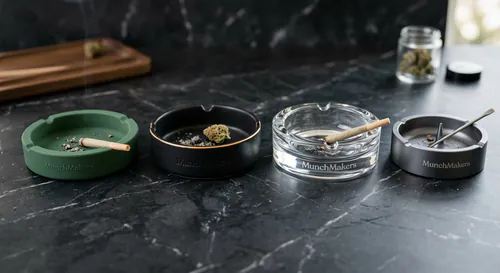
And if you're building out a full setup, it's worth looking at custom lighters, ashtrays, and rolling trays while you're at it.